10 Refund Apps That Find More Than Refunds
Compare 10 refund apps for finding price drops, delivery credits, subscription savings, and forgotten refunds, with privacy and pricing details.
20 min read
The usual advice about refund apps is to connect your accounts and let the savings arrive. That skips the most important distinction: finding a possible refund isn't the same as getting money back.
Suppose you buy headphones, notice a lower price afterward, receive another order late, and forget that a streaming trial is about to renew. Those problems require different actions. A price tracker can flag the cheaper headphones, but it can't establish refund eligibility. A purchase-protection service may accept a claim only if you used its payment network. A subscription dashboard can reveal the recurring charge without canceling it.
Not every refund app finds a refund. Some help you buy for less, some monitor completed purchases, and others organize financial information so you can investigate it yourself.
Choose the tool for the action you need completed, not for the savings total displayed on its screen.
The same distinction applies to card-related charges. Understanding issuer fee refund practices is a separate task from tracking a retailer's price changes.
For a practical comparison, look at the opportunity detected, the evidence required, and who acts next. Pricing, account access, retailer coverage, and claim conditions matter just as much as the alert.
Table of Contents
- 1. Compass+
- 2. TodayPay Refund App
- 3. Earny
- 4. Link by Stripe
- 5. Rocket Money
- 6. Capital One Shopping
- 7. PayPal Honey
- 8. Keepa
- 9. CamelCamelCamel
- 10. Empower Personal Dashboard
- Top 10 Refund Apps: Feature Comparison
- Choose for the Savings Moment You Want to Catch
1. Compass+
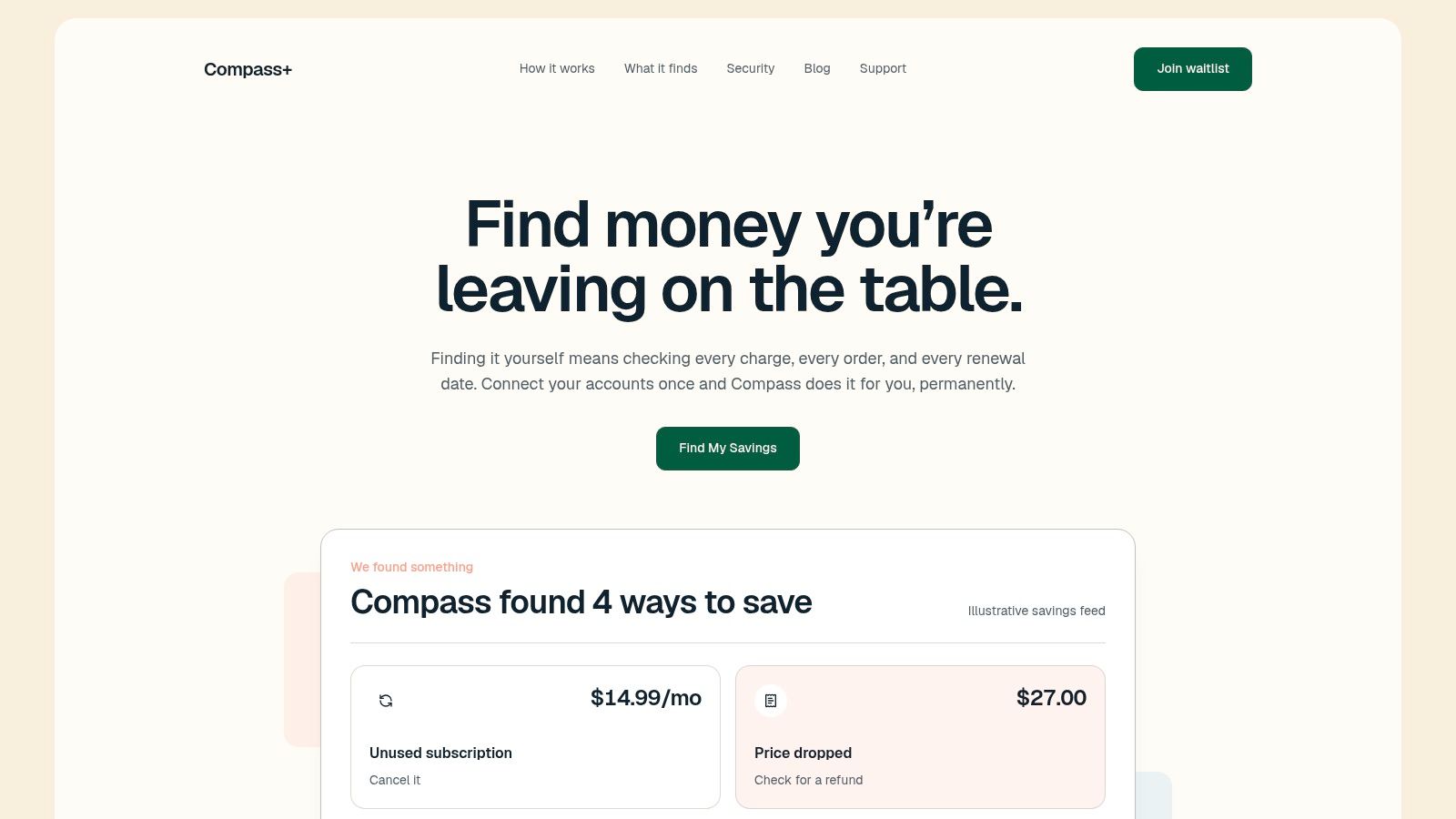
Compass+ is the broadest proactive savings-monitoring option in this group, based on its described scope. Rather than concentrating on a retailer or recurring payments alone, it's designed to connect bank transactions, money-related emails, calendar dates, and shopping activity.
Its potential findings include promised refunds that haven't arrived, duplicate charges, rising bills, post-purchase price drops, late-delivery credits, and subscriptions approaching renewal. Each finding comes with an estimated amount, an explanation, and a recommended next step, which makes it more action-oriented than a spending dashboard.
What It Detects Versus What It Does
Compass+ is detection-only. It doesn't issue refunds or cancel subscriptions, and an estimated opportunity isn't a confirmed entitlement. You may still need to review a merchant policy, contact support, request a credit, or cancel a service yourself.
That distinction matters especially for shopping alerts. Before pursuing a lower Amazon price, review the relevant Amazon price-adjustment considerations, rather than treating the price difference as money already owed.
- Evidence needed: Connected transaction records, receipts, refund confirmations, delivery information, and relevant deadlines help explain a finding.
- Access controls: The current Plaid bank connection is read-only and can't move money. Compass+ says it doesn't store banking passwords, and connections are opt-in and individually revocable.
- Email boundaries: Its described email access focuses on receipts, renewals, and refund confirmations rather than general correspondence.
- Availability and cost: The standalone experience is currently waitlist-only, and no Compass+ price is listed. A money-question assistant is available inside Gerald.
Best fit: Someone who wants help noticing different kinds of financial loose ends across connected accounts. The limitation is equally clear: broader monitoring can reduce investigation work, but eligibility and follow-through still determine whether a finding becomes recovered money.
2. TodayPay Refund App
A shopper waiting for a return refund needs more than a chart showing yesterday's price. TodayPay positions itself around the period after checkout, combining order tracking, price monitoring, and assistance with eligible price-adjustment requests.
TodayPay's refund app describes support for retailers including Amazon, Walmart, Best Buy, eBay, Nike, and SHEIN. Its listed functions include consolidating supported orders, detecting post-purchase price drops, and tracking delivery and return status. That makes it a closer functional match for order-specific recovery than a general coupon extension.
Where the Assistance Matters
The useful distinction is automated price-adjustment assistance, rather than notification alone. However, assistance doesn't establish that a retailer's policy covers your purchase, and TodayPay doesn't guarantee a refund.
For an eligible request, the evidence you should preserve includes the original receipt, purchase date, exact product, lower-price listing, and applicable policy. For a return, keep the return authorization, shipping evidence, and merchant confirmation until the credit appears.
- Savings opportunity: A qualifying post-purchase adjustment or an unresolved delivery or return issue.
- Coverage constraint: Supported retailers and available order details determine what the app can monitor.
- Pricing question: Check current fees and eligibility conditions in the app before relying on assistance.
- Your remaining work: Review the finding, supply missing evidence, and confirm whether the merchant issued the refund.
Best fit: Shoppers who want purchase monitoring tied to specific orders. Choose it for its post-purchase workflow, not on the assumption that every supported retailer offers the same remedy for a price drop.
3. Earny
Earny is more relevant to an Amazon order than to a household-wide statement audit. It monitors linked Amazon purchases for price changes and late deliveries, and it also promotes cashback offers.
Earny's purchase-monitoring service can surface events a shopper might otherwise miss. The important comparison with TodayPay is not whether both detect price drops, but how much work remains after detection. Earny's alerts may help you seek compensation where available, but they don't guarantee a credit.
Late delivery deserves attention without inflated expectations. The FTC's pandemic online-shopping complaint report recorded more than 18,000 non-delivery complaints during April and May 2020. That historical complaint evidence concerns goods not received, not a promise that a late package qualifies for compensation.
A late-delivery notification documents something to investigate. It doesn't prove that the seller offered a compensable delivery guarantee.
For a useful claim, preserve the promised delivery date, actual delivery information, order details, and any relevant merchant commitment. For a price alert, consult the applicable retailer price-adjustment policies before requesting money.
Privacy is a material consideration: Earny requires Amazon account access for its purchase-monitoring function. Review the access permissions, revocation process, and data terms before connecting.
Current pricing and feature availability aren't clearly established in the supplied information, so verify them before enrolling. Best fit: Amazon shoppers who want price and delivery alerts and are willing to evaluate and pursue the resulting opportunities themselves.
4. Link by Stripe
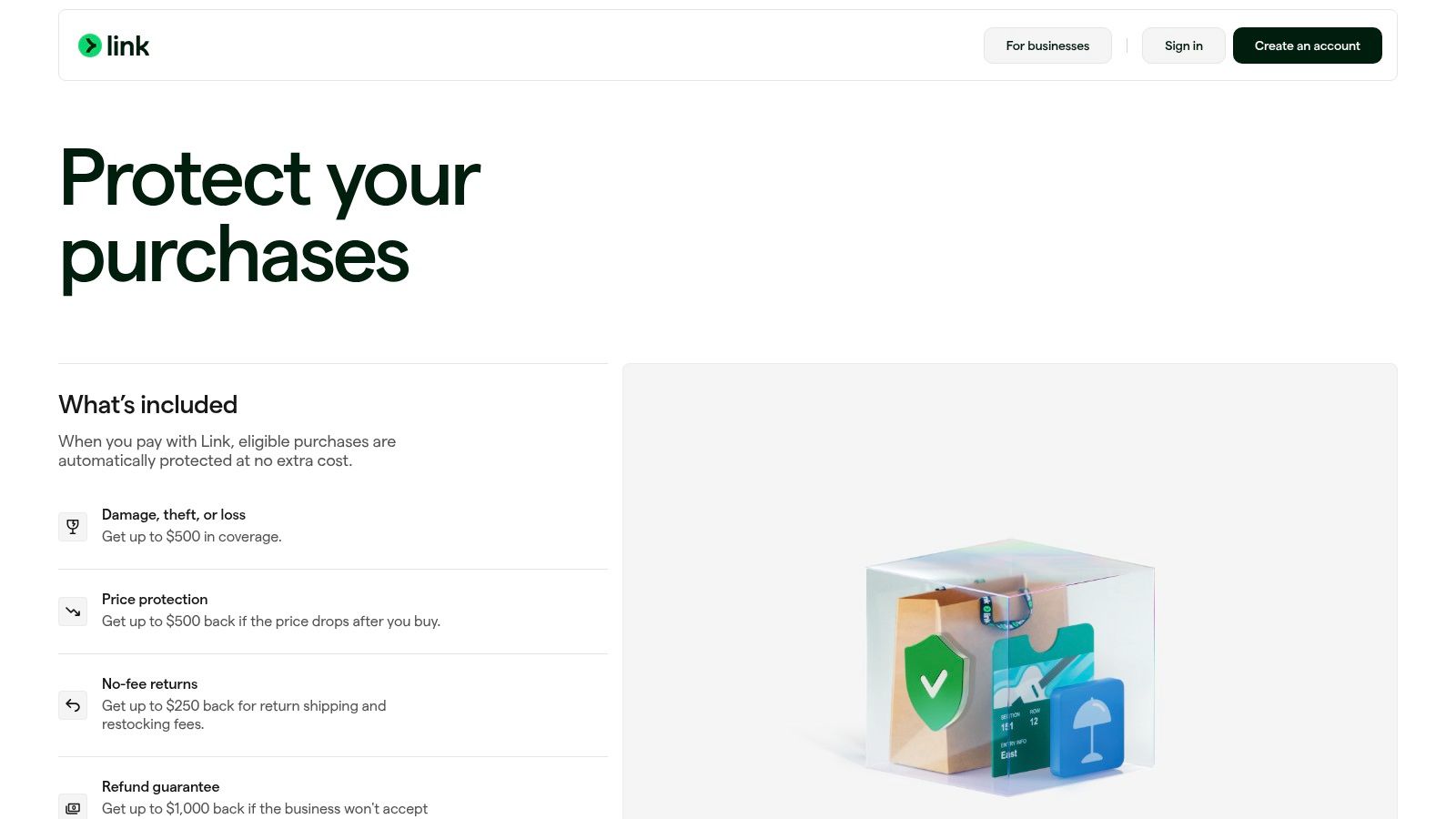
Link belongs in the purchase-protection category, not the account-scanning category. It advertises protections for qualifying purchases made using Link, with an in-app process for submitting claims.
The Link purchase-protection page describes benefits that can include price protection, certain return-related reimbursements, and coverage for some damage, loss, or theft claims. Those benefits are subject to eligibility requirements, exclusions, claim periods, and approval.
Protection Starts With the Transaction
The key limitation comes before any refund request: the purchase must qualify through Link. Connecting a different shopping account afterward won't turn an unrelated transaction into a protected purchase.
That makes Link meaningfully different from Compass+ or a price tracker. A monitoring tool looks for something worth investigating; a protection benefit provides a defined claim route for transactions that meet its terms.
- Evidence to preserve: Keep the purchase confirmation, proof of payment through Link, relevant product details, and documentation supporting the particular loss or price difference.
- Cost context: Link describes protection as included at no extra cost for eligible purchases. That doesn't remove coverage exclusions or claim requirements.
- Availability check: Confirm regional availability, including U.S. eligibility, and read the full terms before treating a benefit as part of your purchase decision.
- Action afterward: File the claim, respond to requests for documentation, and track the decision.
Best fit: A shopper making an eligible Link purchase who values a defined protection process. It isn't a substitute for monitoring older purchases across unrelated payment methods, and advertised protection shouldn't be counted as recovered money before approval.
5. Rocket Money
A subscription you stop before renewal creates a different kind of value from a refund you obtain afterward. Rocket Money primarily addresses future recurring spending, using connected financial accounts to identify subscriptions, bills, and recurring transactions.
Rocket Money offers free subscription tracking, while paid members can request cancellation assistance for supported services. Its budgeting and spending tools provide additional context, but it doesn't promise to refund previous subscription charges.
The visibility problem is credible. A 2022 C+R Research survey, described in Business Insider's reporting on subscription spending, found that 42% of respondents had forgotten they were still paying for products they no longer used. That's evidence of overlooked spending, not proof that those charges were refundable.
Cancellation Isn't Retrospective Recovery
Rocket Money's useful progression is detect a recurring charge, decide whether to keep it, and seek cancellation where supported. Refund recovery requires an additional question: what grounds justify returning a past payment?
- For ordinary cancellation: Confirm the subscription owner, renewal date, billing channel, and effective cancellation date.
- For a refund request: Preserve trial terms, renewal notices, cancellation attempts, and the charge you're disputing.
- For paid assistance: Check provider support and current membership terms before assuming someone else can complete cancellation.
If your broader concern is distinguishing recoverable money from avoidable spending, this guide to finding money you're owed or wasting helps frame that decision.
Best fit: People who want recurring-charge visibility and an available cancellation-assistance path. Users still need to verify completion and shouldn't treat an unused subscription as automatically refundable.
6. Capital One Shopping
The strongest reason to use Capital One Shopping is often to avoid overpaying before checkout. Its combination of price comparisons, coupon testing, and eligible shopping rewards belongs primarily in shopping optimization.
Capital One Shopping offers a free browser extension and app. It can also notify users about price changes on some viewed or purchased items, but that doesn't make it a universal post-purchase refund service.
Consider the difference in outcomes. A coupon successfully applied before payment changes the amount you pay immediately; a price-drop notification after payment creates a question about the retailer's adjustment policy. Only the latter requires a recovery process.
Keep Different Savings Types Separate
Capital One Shopping can be useful without obtaining any refund. Evaluate its functions independently rather than combining discounts, rewards, and possible adjustments into a single assumed recovery total.
- Price comparison: Use a lower offer to evaluate where to buy, while checking product identity and purchase conditions.
- Coupon testing: Confirm the final checkout price rather than assuming a discovered code applies.
- Shopping rewards: Review merchant participation and qualifying-purchase terms separately from the cash price.
- Post-purchase alerts: Check whether the seller offers an applicable adjustment and what evidence it requires.
Browser-based shopping assistance also deserves a permissions review. Check what browsing or shopping information the extension requests, what it retains, and whether you're comfortable with that access for the features you'll use.
Best fit: Shoppers who want price comparisons and coupon assistance while browsing. Don't confuse its current offering with the former standalone Paribus service, or assume that an alert means someone will submit a refund request for you.
7. PayPal Honey
With Honey, a saved product is the starting point, rather than a potentially disputed transaction. Its Droplist feature lets users track supported products and receive notifications when a tracked price falls below a chosen level.
PayPal Honey also provides coupon-code testing and rewards on eligible purchases through its browser extension and mobile app. It's free to use, and its participating-store coverage extends beyond Amazon.
That combination suits a shopper who hasn't committed to buying yet. You can watch an item, evaluate an alert, and check whether an available coupon changes the final price. Retailers still handle orders, returns, and refunds, so Honey's usefulness shouldn't be confused with claim handling.
Practical rule: A price alert is shopping information until you match it to an eligible purchase and a policy that permits an adjustment.
For a completed purchase, keep the original receipt and the exact lower-priced listing. Then check whether the product, seller, timing, and offer conditions satisfy the retailer's requirements before contacting support.
Coverage and rewards need separate checks. Droplist doesn't cover every product or store, and an eligible rewards purchase isn't necessarily eligible for a post-purchase price adjustment. Review extension permissions and current rewards terms before deciding which features justify installation.
Best fit: Shoppers who want watchlists, coupons, and potential rewards across participating stores. Compared with a dedicated recovery service, Honey leaves the central refund work with you: establish eligibility, contact the merchant, and confirm that the adjustment arrives.
8. Keepa
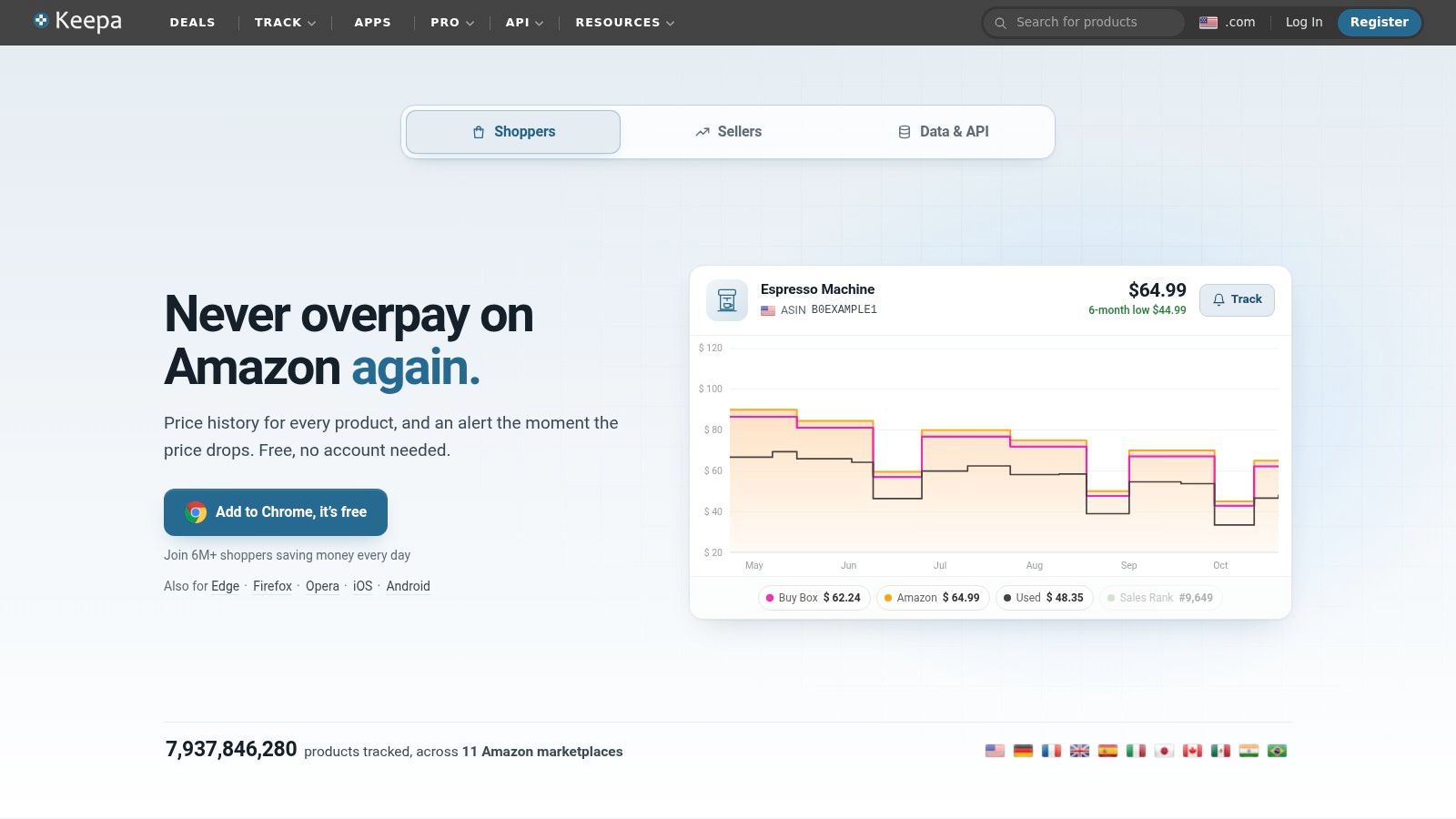
Keepa's distinctive contribution is historical context. Rather than merely telling you that an Amazon price has changed, its charts help you inspect how the tracked price has behaved.
Keepa provides Amazon price-history charts, price-drop and availability alerts, and support for multiple Amazon marketplaces. Its mobile app also includes product search and barcode scanning, while some advanced data or features may require payment.
Better Buying Evidence, Not a Refund Entitlement
A historical chart can help you judge whether to buy now or wait. It doesn't establish that a retailer owes you the difference after checkout.
That distinction is the reason to choose Keepa deliberately. If your main problem is evaluating an Amazon deal, historical pricing may be more useful than a financial dashboard. If your main problem is an unreceived refund, the chart doesn't address it.
- Savings opportunity: Buy at a preferred tracked price or avoid purchasing solely because an offer appears discounted.
- Evidence needed: Identify the exact product and relevant offer before comparing a chart with your intended purchase.
- User action: Set the alert, inspect the resulting listing, and decide whether to buy.
- Refund limitation: A later lower price still needs an applicable seller policy or other qualifying protection before it supports recovery.
Free app and tracking features are available, but check which functions require payment before building a workflow around advanced data.
Best fit: Amazon shoppers who value price history and target-price alerts. Keepa is a useful purchasing tool, but calling it a refund service would obscure the work it doesn't perform: checking your entitlement, filing a claim, or confirming reimbursement.
9. CamelCamelCamel
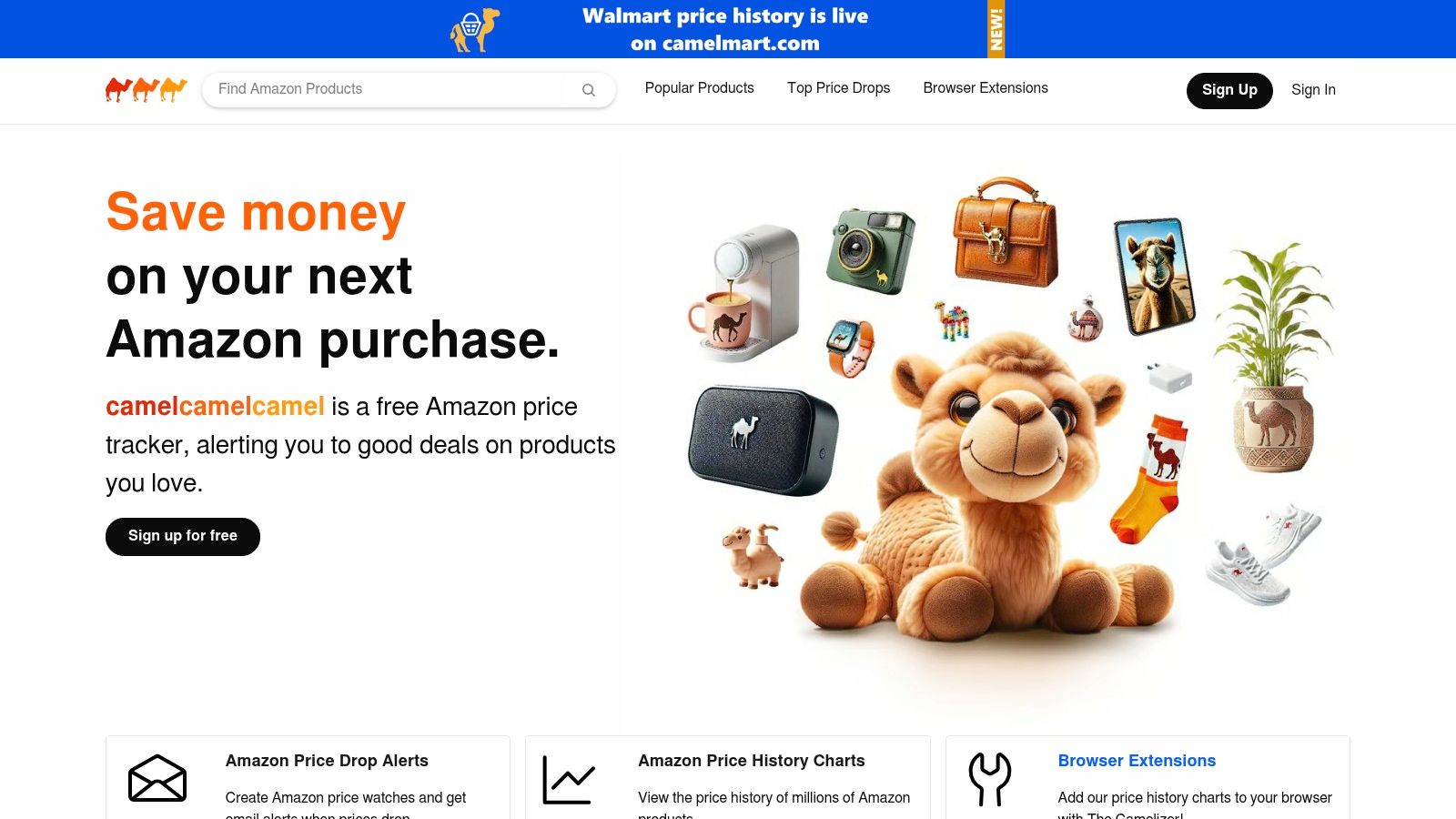
For someone who wants to watch an Amazon product and receive an email when it reaches a target price, CamelCamelCamel offers a focused alternative. Its functions center on price-history charts, product watchlists, email alerts, and the Camelizer browser extension.
CamelCamelCamel is free to use. Unlike a connected-account financial tool, its described purpose is monitoring Amazon listings, not reviewing bank transactions or investigating subscription renewals.
The practical question is whether you need listing-level information or purchase-level recovery. CamelCamelCamel addresses the former: you choose what to watch and act when an alert interests you. It doesn't arrange a retailer refund.
When a Narrow Tool Is Enough
A focused price watch may suit you better than broader account monitoring if your only concern is when to buy a particular Amazon product. There's little reason to choose a bank-connected dashboard solely to answer that shopping question.
Its boundaries remain important:
- Retailer scope: It focuses on Amazon rather than broad shopping or household financial accounts.
- Manual follow-through: You need to open the alert, inspect the current offer, and decide what to do.
- Post-purchase limits: A watched price falling after your purchase doesn't create refund eligibility.
- Permission review: Check the information requested by email alerts and the browser extension separately.
Best fit: Shoppers who want straightforward Amazon watchlists and historical pricing. Choose between this and Keepa based on the interface and tracking functions you'll use, rather than expecting either to recover missed credits or resolve merchant disputes.
10. Empower Personal Dashboard
This dashboard helps you see the charge; it generally doesn't pursue the merchant. The Personal Dashboard from Empower aggregates connected accounts and organizes transactions alongside spending, budgeting, investment, and net-worth tools.
That makes it a financial-visibility tool rather than a recovery service. You can inspect subscription costs or spot a charge worth questioning, but the dashboard supplies a starting point for review. It delivers no determination, dispute, or refund on your behalf.
Best fit: People who want consolidated oversight of spending, investments, and household accounts, and who are comfortable handling the merchant contact, dispute filing, and outcome verification themselves once something looks off.
The useful evidence and next action depend on what you're investigating:
| Charge you notice | Evidence to gather | Next step |
|---|---|---|
| Possible duplicate | Merchant name, amount, transaction status, matching purchase records | Ask the merchant to reverse it, or dispute through the account provider |
| Recurring subscription | Service name, account owner, renewal terms | Cancel directly; escalate if billing continues |
| Missing merchant refund | Refund confirmation and the receiving account | Follow up with the merchant, citing the confirmation |
| Unrecognized purchase | Date, amount, other household members' activity | Investigate promptly through merchant or account channels |
That last row matters most in shared households. A charge that looks unfamiliar may be a purchase another family member made, so confirm who authorized it before treating it as fraud.
Automatic transaction analysis requires connecting your accounts, so weigh that access against the planning value you expect in return. The dashboard can surface something worth questioning. The follow-through stays with you.
Top 10 Refund Apps: Feature Comparison
| Product | Core coverage | Standout benefit | Price & access | Best suited for |
|---|---|---|---|---|
| 🏆 Compass+ | ★ Bank charges, subscriptions, email, calendar, orders, refunds and delivery issues | ✨ Cross-account findings with estimated savings and a suggested next step; bank access is read-only | 💰 Price not listed; standalone product waitlist, assistant available in Gerald | 👥 People seeking proactive, broad money-saving checks |
| TodayPay Refund App | Order tracking, price drops, delivery and return status | ✨ Helps with eligible price-adjustment requests | 💰 Check app for current fees and eligibility | 👥 Shoppers at supported retailers wanting post-purchase help |
| Earny | Amazon price changes, late deliveries and cashback offers | ✨ Combines purchase and delivery monitoring | 💰 Current pricing and availability unclear | 👥 Amazon shoppers seeking purchase alerts |
| Link by Stripe | Protections for qualifying Link purchases | ✨ In-app claims; advertised price protection up to $500 | 💰 Included at no extra cost for eligible purchases; terms apply | 👥 Link users wanting purchase protection |
| Rocket Money | Recurring charges, bills, subscriptions and budgeting | ✨ Paid cancellation help for supported providers | 💰 Free subscription tracking; paid features available | 👥 People managing bills and unwanted subscriptions |
| Capital One Shopping | Price comparisons, coupons, some price alerts and rewards | ✨ Free shopping tools combine coupons and rewards | 💰 Free browser extension and app | 👥 Shoppers seeking deals before checkout |
| PayPal Honey | Droplist tracking, coupons and eligible-purchase rewards | ✨ Price alerts plus automatic coupon testing | 💰 Free; rewards and tracking depend on eligibility | 👥 Online shoppers looking for coupons and alerts |
| Keepa | Amazon price history, price alerts and availability | ✨ Historical charts help assess deals | 💰 Free features; some advanced features may cost extra | 👥 Amazon shoppers tracking prices over time |
| CamelCamelCamel | Amazon price history, watchlists and email alerts | ✨ Simple free price tracking | 💰 Free | 👥 Amazon shoppers who want target-price alerts |
| Empower Personal Dashboard | Connected accounts, transactions, spending, investments and net worth | ✨ Broad financial overview and planning tools | 💰 Dashboard and financial tools are free | 👥 People seeking a consolidated financial picture |
Choose for the Savings Moment You Want to Catch
The best refund apps aren't interchangeable because they intervene at different points in a purchase. Before checkout, the goal is to pay less. After checkout, it may be to establish eligibility, submit a request, or verify that a promised credit arrived.
Choose TodayPay for supported order monitoring and potential price-adjustment assistance, or Earny for Amazon-focused price and delivery alerts. Consider Link when you're making a qualifying transaction and want a defined purchase-protection claim route.
Match the Tool to the Unfinished Action
For Amazon price history, Keepa or CamelCamelCamel is the more direct fit. For coupon testing and shopping optimization, consider Capital One Shopping or Honey. Rocket Money is a stronger choice for understanding recurring expenses than for recovering past retail refunds.
Compass+ is the closest fit in this group to proactive monitoring across different savings categories. Its described scope includes refunds, price drops, delivery credits, subscription renewals, duplicate charges, and bill changes across connected accounts. Its standalone waitlist status, unpublished pricing, and detection-only role should remain part of that decision.
The most important measurement is money received or a future charge demonstrably prevented, not opportunities displayed. In the FTC's 2024 refund-program snapshot, only 59% of eligible consumers in programs using defendant-provided data had cashed their payments at that point, although payments could still be cashed afterward. That isn't a retail-refund estimate, but it illustrates why eligibility and completed recovery must be tracked separately.
- Preserve the evidence: Keep receipts, policy terms, delivery promises, cancellation attempts, and refund confirmations.
- Identify the remedy: Distinguish a contractual or statutory entitlement from a discretionary goodwill credit.
- Track the outcome: Record the request, merchant response, deadline, and actual payment. Don't seek duplicate recovery through overlapping channels.
- Limit account access: Confirm requested permissions, retention practices, regional availability, and whether claim or cancellation assistance costs extra.
If a merchant rejects a request, ask for the reason and compare it with your documentation before escalating through an appropriate payment or consumer-protection channel. Don't assume that every detected opportunity warrants a dispute.
Choose the smallest set of tools that addresses your actual unfinished tasks. A price tracker plus a recurring-charge tool may be enough. Broader monitoring makes more sense when the problem is keeping track of purchases, emails, deadlines, and promised payments together.
Compass+ is designed to monitor connected accounts for overlooked refunds, price drops, delivery credits, and recurring-charge opportunities, pairing findings with an estimated amount and a suggested next step. Visit Compass+ to review its access controls and join the standalone waitlist if that broader monitoring approach fits your needs.