Does Wayfair Do Price Adjustments? the 2026 Guide
Wondering if does wayfair do price adjustments? Find out the current policy, exceptions, and what to do when prices drop after your purchase.
13 min read
Wayfair no longer offers an official price-adjustment program for internal price drops or competitor matching. If the same item becomes cheaper after you buy it, you shouldn't expect an automatic refund.
You're staring at your order confirmation, wondering how a sofa you bought for $599 is suddenly listed at $499. The difference is enough to matter, but the usual assumption is that the retailer will spot the change, credit your account, and save you the trouble of calling.
That assumption can cost you. Wayfair's current position leaves the responsibility with you, so the smart response isn't to wait for a safety-net refund. Check the price quickly, preserve the evidence, and contact support before the order moves further through the fulfillment process.
Table of Contents
- The Harsh Reality of Wayfair's Current Policy
- Understanding Why the Policy Changed
- The Sister-Brand Exception You Should Know
- How to Request a Manual Adjustment
- What Actually Works in Customer Service Appeals
- Using Automation to Catch Missing Credits
The Harsh Reality of Wayfair's Current Policy
You bought the sofa at $599. Three days later, the product page shows $499. At many retailers, that situation triggers a familiar request for a post-purchase adjustment. At Wayfair, the official help information says the company doesn't match competitor pricing and doesn't price match internal price drops. The practical meaning is simple: you shouldn't count on Wayfair to refund the difference automatically when its own price falls. Wayfair's official help category states the company's position directly.
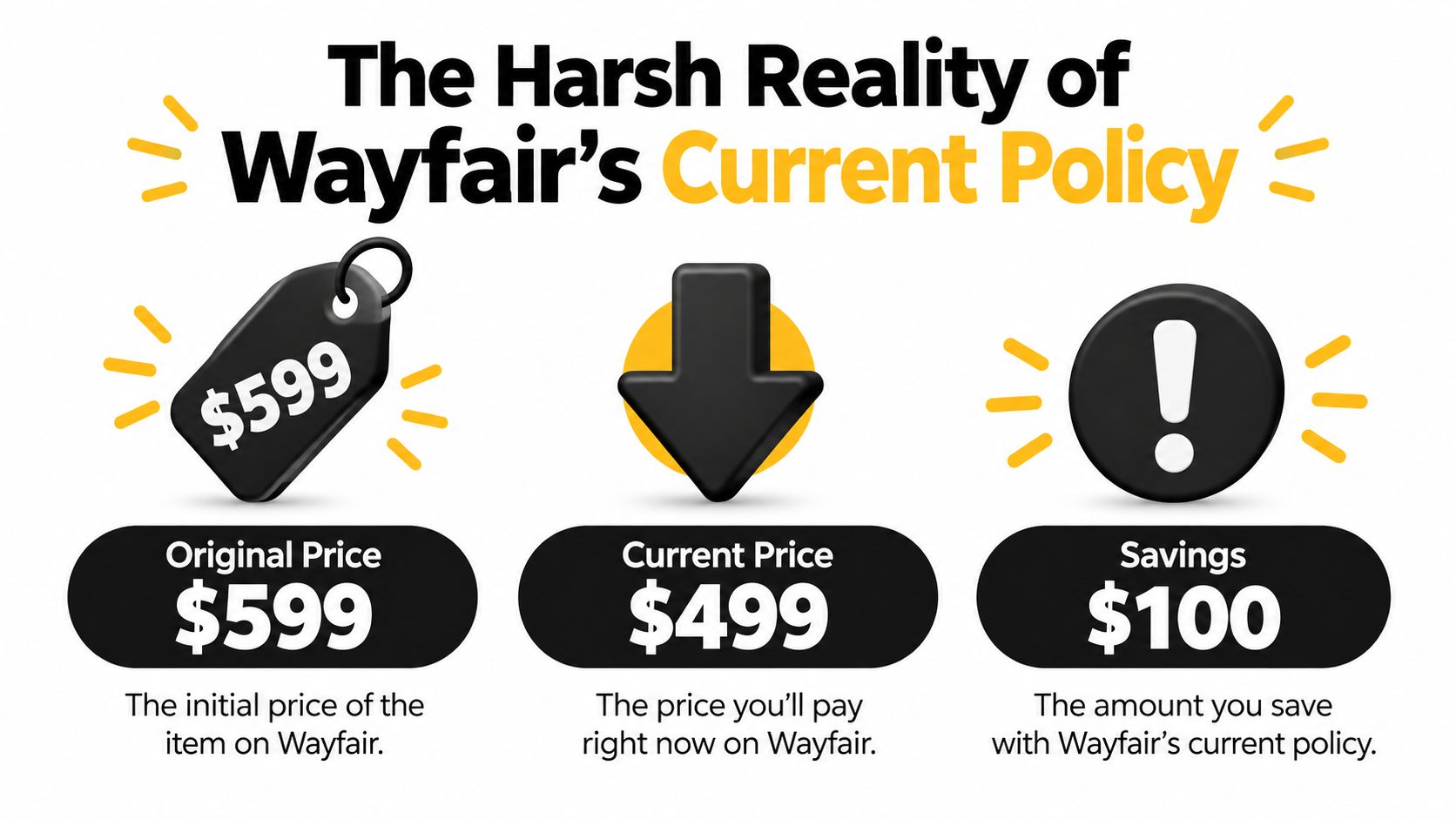
That's the safety-net gap. Shoppers often treat the receipt as a live promise that the retailer will protect the purchase price after checkout. Wayfair's current policy breaks that model. The lower listing price may be visible to you, but visibility doesn't create an automatic credit, and the website won't recalculate your order on its own.
What this means for your wallet
The company's policy covers two situations shoppers commonly confuse:
- A competitor lists the same item for less. Wayfair says it doesn't match that price.
- Wayfair later lowers its own listing price. Wayfair says it doesn't provide a standard adjustment for that internal drop.
Independent policy summaries also describe the formal price-adjustment program as discontinued. One 2024 policy guide on Wayfair price adjustments says Wayfair previously allowed adjustments within 7 days of purchase before ending that program. That historical detail explains why older advice still appears online, but it shouldn't shape your expectations today.
The only realistic path is a manual request, and even that isn't guaranteed. Treat any credit as a customer-service exception, not as an entitlement created by a published price-protection promise.
Practical rule: If the price drops, act immediately. Waiting for Wayfair's system to notice is a strategy built around a refund process the company no longer offers.
Understanding Why the Policy Changed
The old shopping mindset assumes stable prices and formal protection. Wayfair's marketplace behaves differently. Furniture listings can move in and out of promotions, and shoppers may see discounts tied to specific campaigns, inventory decisions, product variants, or seller activity. That makes the checkout price feel temporary, even when the product page looks permanent.
The business logic is straightforward. A retailer that runs frequent promotions can avoid promising every buyer the lowest later price. Instead of retroactively correcting earlier orders, it can keep sale pricing tied to the moment a customer purchases. That shifts the burden from the retailer's systems to the shopper's attention.
This doesn't make the result better for you. It means you need to separate a sale price from a refund right. A product can be cheaper today without Wayfair owing you the difference under its public policy.
Stop treating the receipt as an insurance policy
Older articles can create false confidence because they describe a discontinued process. If you bought from Wayfair years ago, or remember guidance about requesting an adjustment within a short window, that memory may no longer match the company's current help pages. The independent policy summary documents that shift, while Wayfair's own help information controls your present expectations.
The better approach is tactical:
- Buy when the value works for you, rather than assuming a future adjustment will protect the purchase.
- Monitor the listing after checkout if the price matters.
- Contact support as soon as you find a drop, because a live order may offer more room for a courtesy solution than a completed transaction.
- Keep return and cancellation rules in view, especially for expensive furniture or items with complicated delivery.
Wayfair hasn't given shoppers a dependable automatic correction mechanism. Your protection now comes from timing, records, and a willingness to ask before the transaction becomes harder to change.
The Sister-Brand Exception You Should Know
Wayfair's own price-adjustment position doesn't tell the whole ecosystem story. Independent policy trackers report that the company may consider price matches or courtesy adjustments involving affiliated brands, including AllModern, Birch Lane, Joss & Main, and Perigold. This is different from competitor matching. These brands sit within Wayfair's broader family, so an agent may have more discretion when the lower listing appears across affiliated storefronts.
The wording matters. “May consider” isn't the same as “will refund.” The exception functions as a possible courtesy route, not a guaranteed program that gives every shopper the same outcome.
Compare the possible routes
| Situation | What you should expect |
|---|---|
| Wayfair price drops on the same listing | No standard internal price adjustment |
| A competitor lists the item for less | No standard competitor match |
| An affiliated brand lists a comparable item for less | A discretionary review may be possible |
| The item is clearance, personalized, open-box, or non-returnable | The request is more likely to be excluded |
| The order has already shipped or the lower price is promotional | Approval may be harder |
The sister-brand policy summary from DoNotPay describes the commonly reported conditions, including a review period of about 7 days after purchase. It also identifies exclusions such as open-box, clearance, personalized, and non-returnable products. Because approval can depend on shipping status and promotional timing, you shouldn't treat that window as a promise.
Use the exception carefully
First, verify that you're comparing the same product, not merely a similar-looking nightstand or sofa. Match the dimensions, finish, configuration, seller details, shipping terms, and stock status. A lower price on an affiliated site may still fail review if the item differs in a meaningful way.
Then contact support with the order details and the affiliated listing. Ask for a courtesy adjustment review, not an argument about what Wayfair “owes” you. That language acknowledges the discretionary nature of the request and gives the agent a clear action to evaluate.
If the item has already shipped, the price is part of a special event, or the product falls into an excluded category, prepare for a refusal. Don't keep escalating as though a hidden guarantee exists. The exception is worth checking, but it isn't a substitute for a formal policy.
How to Request a Manual Adjustment
A manual request works best when you make the agent's job easy. Don't send a vague message saying the item is cheaper. Give support a clean record that connects the current listing to your original order.
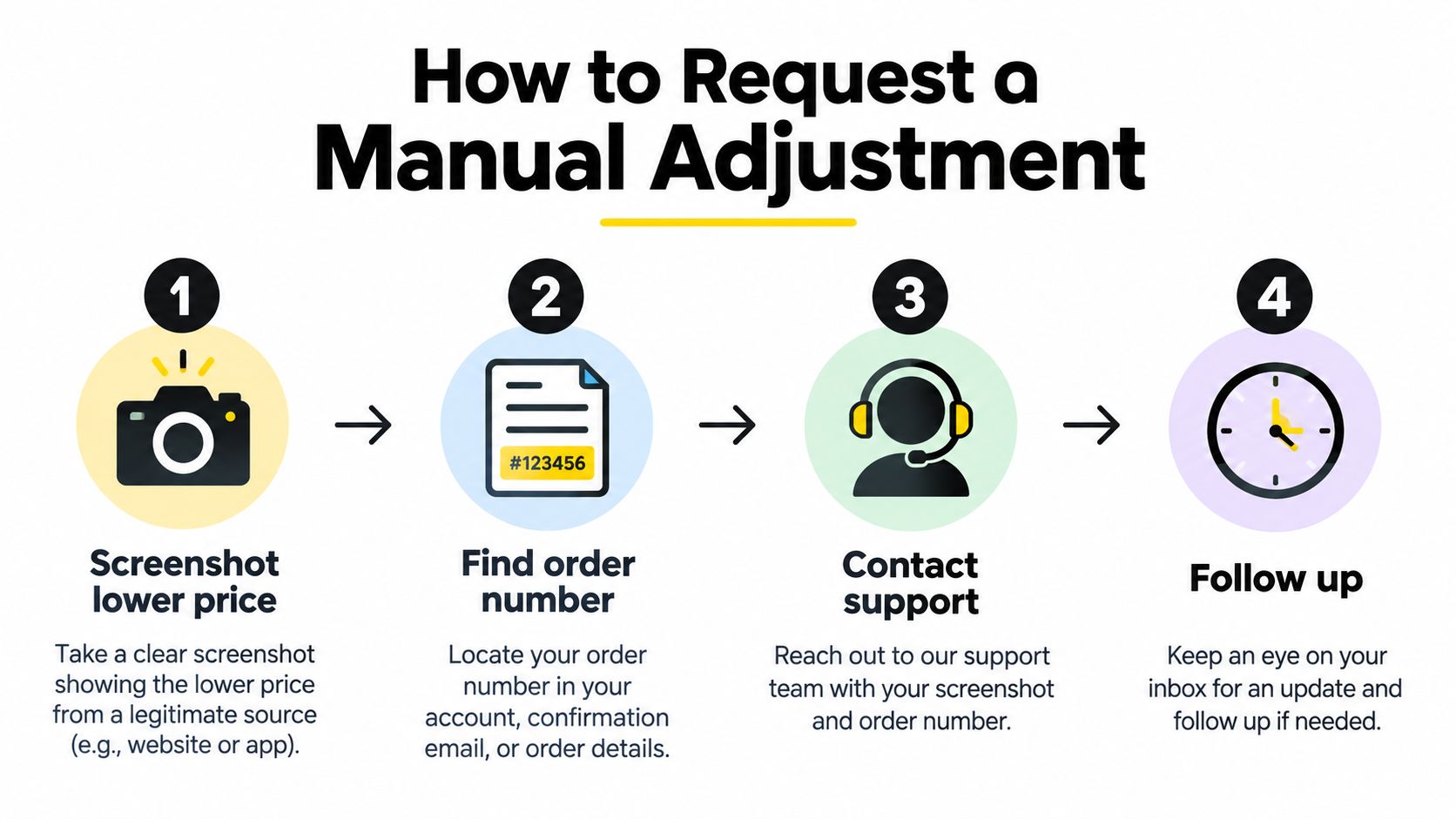
Gather the evidence first
Save the lower-price page before it changes. Your evidence should show the product identity, current price, and date you captured it. Also locate the original order confirmation so the agent can match the request to the right purchase.
Keep these details together:
- Current listing: Capture the product name, model or item identifier when available, price, and relevant variant.
- Original order: Have your order number, purchase date, and the price you paid ready.
- Comparison details: Confirm that size, color, configuration, quantity, and seller information match.
- Timing: Record when you noticed the lower price and whether the order has shipped.
- Terms: Note whether the lower price comes from clearance, an open-box listing, personalization, or a promotional event.
A screenshot isn't proof that Wayfair must pay you. It's evidence that lets an agent evaluate a specific request instead of searching blindly through your account.
Contact support with a precise request
Use Wayfair's available customer-support channel and keep the opening factual. You can say:
“I'm contacting you about order [order number]. I purchased [exact item] on [purchase date], and I've found the same item listed at a lower price. The order has [not shipped / shipped]. Could you review whether a one-time courtesy adjustment is available?”
That script avoids claiming a right Wayfair's policy doesn't provide. It also gives the agent the information needed to decide quickly.
Don't lead with a threat to post a complaint, a demand for a competitor match, or a long explanation of how another retailer handles price drops. Those points don't change Wayfair's stated position. Ask for a review, attach the relevant evidence, and stay focused on the exact order.
Keep a record of the response
Write down the support date, the agent's response, and any promised follow-up. If the agent asks for documentation, send only the material relevant to the purchase and price difference.
For a broader process for organizing refund evidence and follow-ups, use this guide to track a refund. The same discipline helps here, even when the outcome depends on a courtesy decision rather than an established adjustment program.
What Actually Works in Customer Service Appeals
A request succeeds or fails at the point where an agent decides whether to make an exception. Since Wayfair publicly says it doesn't match competitors or internal price drops, arguing that the lower price automatically qualifies is the wrong approach. You're asking for judgment, so give the agent a practical reason to help.
The strongest appeal is specific and low-friction. Explain that the item is identical, show the lower listing, identify the order, and mention whether fulfillment has begun. A live order may be easier for support to address than a completed delivery, because the company may still have operational options available.
Build a reasonable case
Use context, but don't manufacture urgency or make claims you can't prove. These points can help frame the request:
- A clear product match: The listing, variation, and quantity are the same.
- A recent purchase: Your order was placed recently enough that the price change feels connected to the transaction.
- A pending fulfillment issue: The order hasn't shipped, or delivery timing has changed.
- A broader order relationship: You've placed multiple orders or bought several coordinated pieces, and you're asking for a practical courtesy resolution.
- A simple remedy: You're requesting a credit or another option support can easily process.
Loyalty and order context may make the request more persuasive, but neither creates a policy entitlement. Shipping delays can also provide useful context, particularly when you're already contacting support about the order. Don't present them as automatic triggers for a price credit.
The winning tone is firm, organized, and realistic. You're giving support a reason to help, not pretending the rules say something they don't.
If the first agent declines, you can ask politely whether a supervisor or another available resolution exists. Avoid repeated contacts that tell the same story without new evidence. A second review may clarify the decision, but persistence alone won't turn a discretionary courtesy into a guaranteed refund.
Before contacting support, check whether the lower price is tied to a promotion, a different product condition, or an excluded listing type. For additional ways to identify overlooked credits and charges, review this money recovery checklist. It can help you distinguish a genuine opportunity from a price comparison that doesn't qualify.
Using Automation to Catch Missing Credits
Manual checking is the weak point in Wayfair's model. You have to notice the lower price, confirm that the item matches, save the evidence, and contact support before the opportunity becomes harder to pursue. Miss one step and the price can disappear without leaving a useful record.
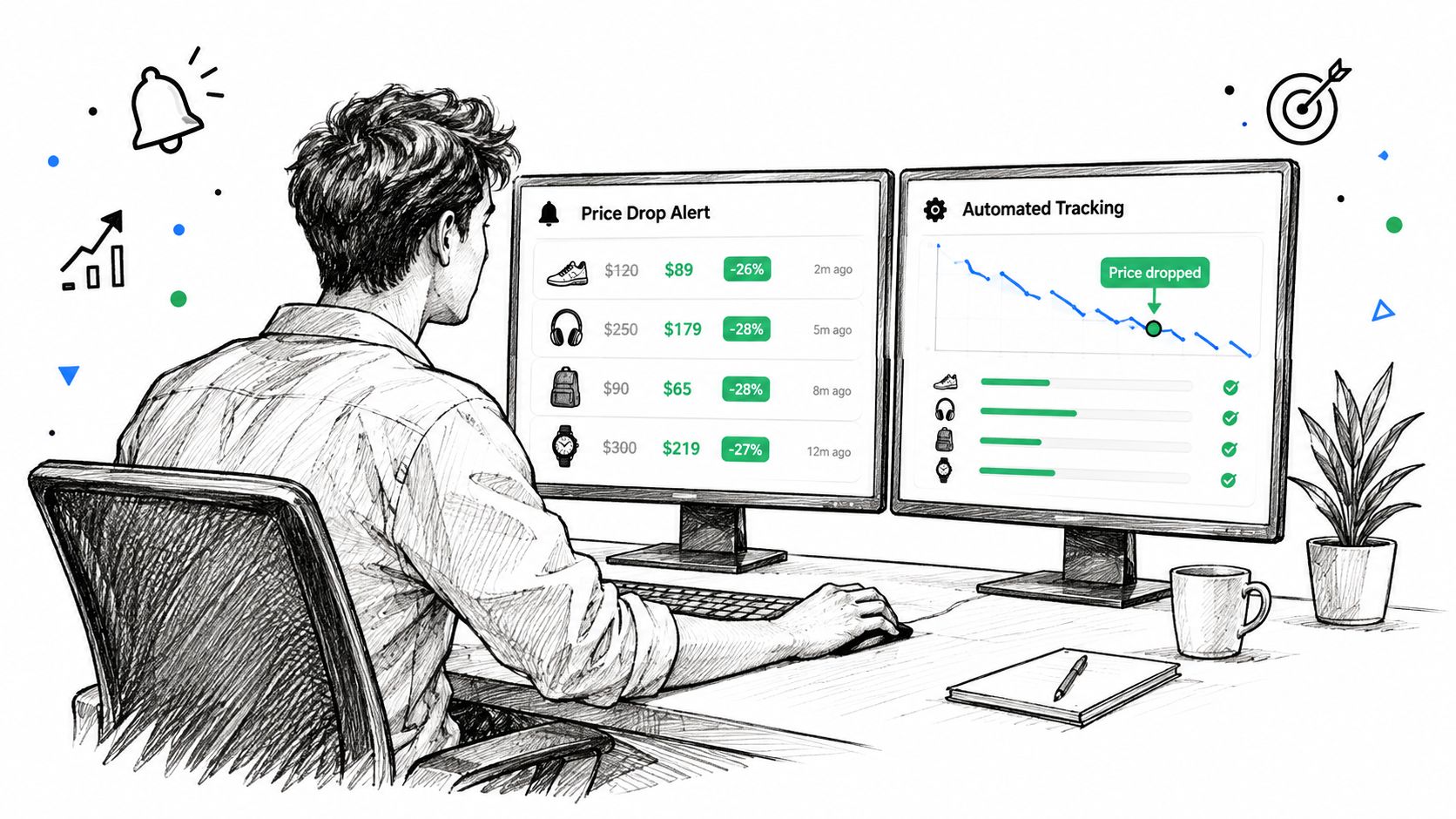
The practical solution is to replace passive hope with monitoring. A service that connects purchase records with later price changes can flag the event while you still have time to act. That doesn't force Wayfair to approve a credit, but it prevents the most common failure, never realizing the price changed.
What automated monitoring should do
Look for a system that identifies the specific order, the relevant price movement, and the next action. A useful alert should help you answer:
- Which item changed price?
- Which order contains it?
- When did the change appear?
- Is the product still the same variant?
- What should you ask the retailer to review?
Compass+ is one option that monitors connected financial, email, calendar, and shopping accounts to surface opportunities such as post-purchase price drops, refunds owed, late-delivery credits, duplicate charges, and subscription renewals. Its money leak finder is designed to turn a detected issue into a concrete next step rather than leaving you to search through statements and receipts.
Automation also changes your behavior. You no longer need to remember every purchase or repeatedly open product pages hoping to catch a sale. You receive a prompt tied to the transaction, then decide whether the potential recovery justifies a support request.
The limits still matter. Monitoring can identify a possible discrepancy, but it can't override Wayfair's public policy or guarantee a courtesy adjustment. Treat the alert as a trigger for immediate verification and contact, not as proof that money is automatically due.
A short explanation of this approach is available here:
The new protection model is simple. Don't wait for Wayfair to watch your receipt. Watch the purchase yourself, use automation where possible, and contact support as soon as the facts line up.
Compass+ monitors connected shopping, email, financial, and calendar accounts to surface post-purchase price drops, missing refunds, delivery credits, and other concrete savings opportunities. If you're tired of discovering Wayfair discounts too late, visit Compass+ and join the waitlist or explore the available assistant experience.