How to Dispute a Charge on Your Credit Card
Learn how to dispute a charge on credit or debit cards, what evidence to collect, and the exact steps to recover funds from unauthorized or erroneous purchases.
13 min read
You spot a charge on your statement that doesn't look right. Maybe you don't recognize the merchant, or maybe you returned an item weeks ago and the promised refund never appeared. The first impulse is often to call the bank and say “fraud.” Don't rush: the right way to dispute a charge depends on what happened.
Start by identifying whether the charge was unauthorized, duplicated, or authorized but unresolved. That distinction guides what to do next and which records to gather. For a U.S. credit-card billing error, the Fair Credit Billing Act (FCBA) gives you a formal dispute process, but deadlines apply, so act promptly and keep evidence organized. The Federal Trade Commission's guidance on billing errors explains the basic protections and notice requirements.
Table of Contents
- That Confusing Charge on Your Statement
- Separate Authorized Disputes from True Fraud
- What to Do Before You Pick Up the Phone
- The 60-Day Clock and What to Send Your Issuer
- Evidence That Actually Wins Authorized-But-Undelivered Cases
- What Happens After You File and How to Escalate
- Catching Disputable Charges Before the Clock Starts
That Confusing Charge on Your Statement
You're scanning your statement and one line stops you. The merchant name is unfamiliar, the amount seems off, or you remember returning the item but can't remember whether the credit arrived. Don't ignore it, and don't guess at the explanation. First, match the charge to a receipt, order email, subscription, or purchase made by an authorized user on your account.
Then classify what you found. A charge you never approved is unauthorized. Two charges for one purchase may be a duplicate. A transaction you approved can still be worth disputing if the merchant didn't deliver what you paid for, didn't credit a return, or didn't honor a promised refund. That last category is easy to overlook because it isn't classic fraud, but it can still involve a billing error.
Billing disputes aren't rare anomalies. In one Consumer Financial Protection Bureau snapshot of approximately 53,800 credit-card complaints, billing disputes accounted for 16% of complaints. A later CFPB summary reported more than 19,000 credit-card complaints concerning billing disputes with issuers. The CFPB's complaint summary describes recurring problems such as returns that weren't credited and charges that exceeded a receipt.
| Charge type | Example | First action | Key evidence |
|---|---|---|---|
| Unauthorized | A purchase you didn't make | Contact your issuer promptly | Transaction details and account-security records |
| Duplicate or incorrect | The same purchase appears twice | Compare the statement with the receipt | Receipt and statement entry |
| Merchant failed to perform | A returned item wasn't credited | Contact the merchant and document the exchange | Return tracking, correspondence, and refund promise |
Some entries don't call for a formal dispute. A pending authorization may not be a completed charge, and a restaurant total can reflect a tip added after you signed. Check whether the transaction has posted and compare it with your receipt before escalating. If the amount is still wrong, or a merchant's promise remains unfulfilled, create a dated record and take action.
Separate Authorized Disputes from True Fraud
A fraud report and a merchant-performance dispute aren't interchangeable. If someone used your card without permission, tell the issuer you don't recognize or authorize the transaction. If you made the purchase but the merchant failed to deliver, say exactly that. Calling an unresolved refund “fraud” muddies the facts and can send your claim down the wrong path.
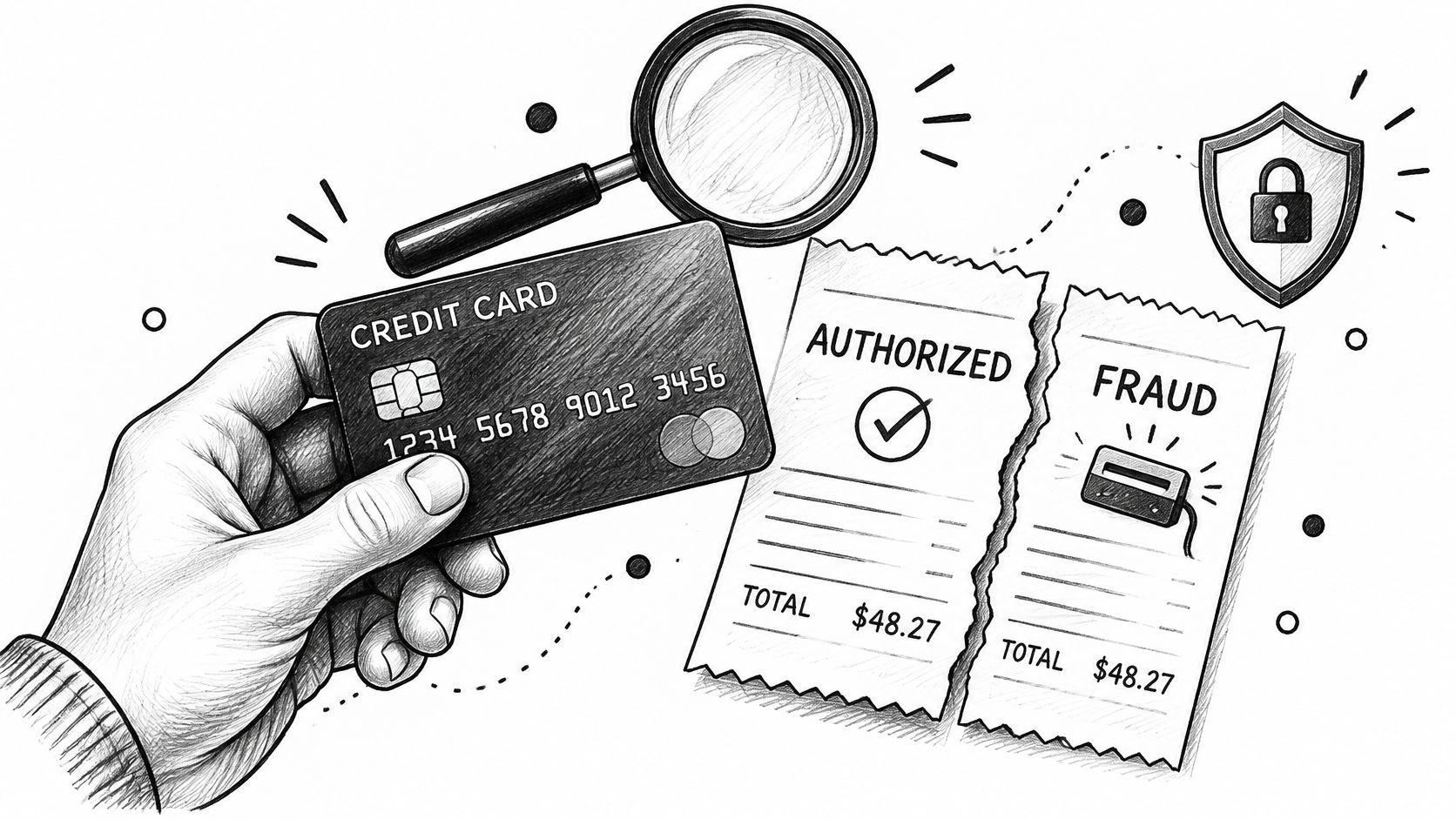
Use this quick decision guide before you contact the issuer:
| What happened | How to describe it | What to do first |
|---|---|---|
| You didn't approve the transaction | Unauthorized charge | Contact the issuer promptly and secure the account |
| You approved one purchase, but it appears more than once | Duplicate charge | Compare the statement entries with the receipt, then contact the merchant or issuer |
| You approved the purchase, but the goods, service, or refund didn't arrive as agreed | Merchant failure | Contact the merchant and save the response and supporting records |
For an authorized purchase that went wrong, the issue is usually proof of what the merchant promised and what happened afterward. A retailer that accepted your return but never credited the card is different from a stranger making a purchase with stolen card details. Keep your description factual: identify the transaction, explain what you authorized, and state what the merchant failed to do.
When the paperwork is confusing, a guide to filing a credit dispute form can help you think through what information a formal dispute needs. For purchases that began as free trials, it's also useful to review how to avoid unwanted free-trial charges, especially if you're trying to determine whether you agreed to recurring billing.
A short explainer can help clarify the basic idea of a card dispute before you contact your issuer.
What to Do Before You Pick Up the Phone
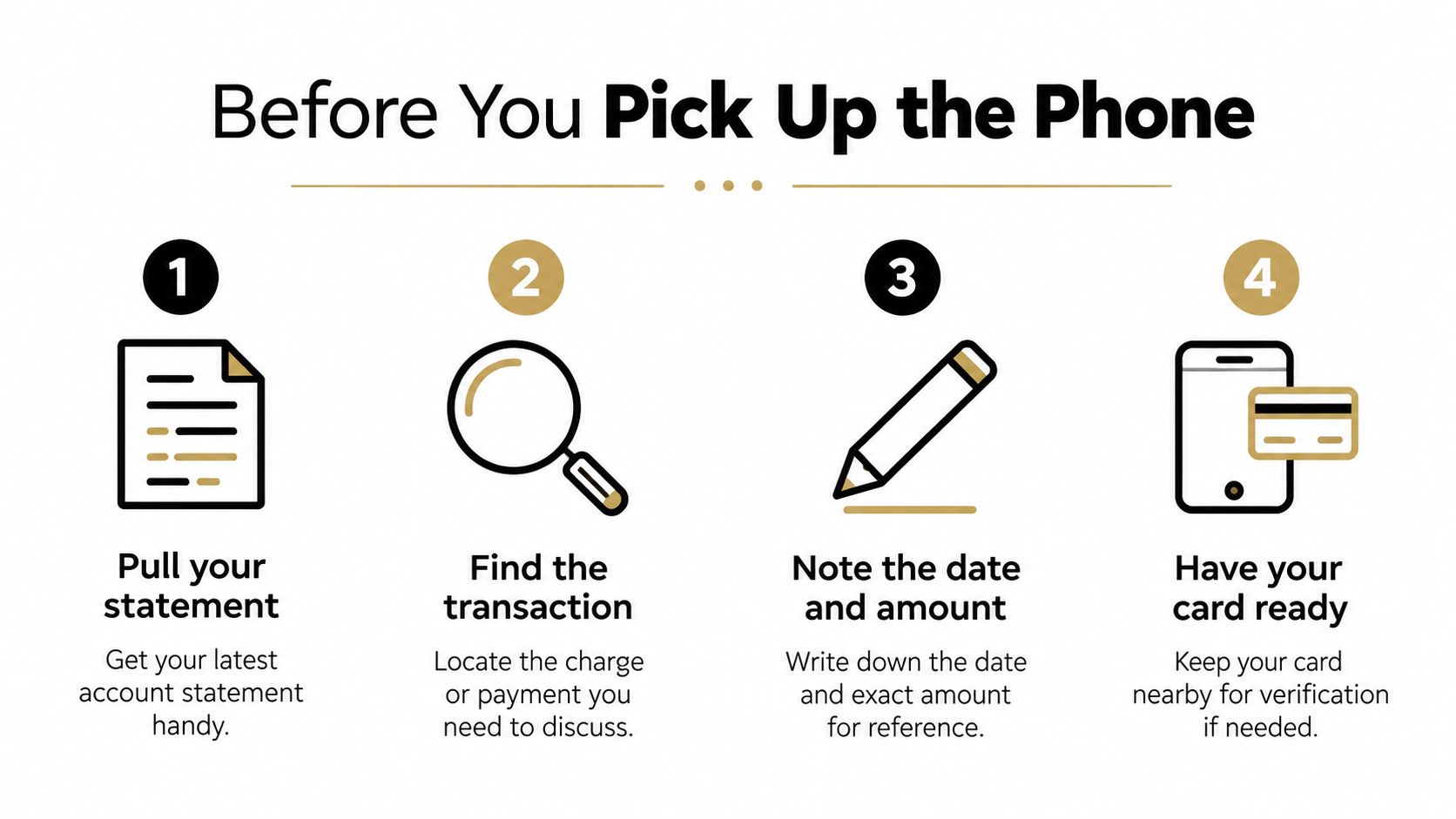
A little preparation makes your first call or online submission clearer. Start with the statement entry, not your memory. Write down the merchant name as it appears, the transaction date, the amount, and whether the charge has posted. Then locate the matching order confirmation, receipt, or subscription notice.
Next, check for a refund or adjustment that may have posted under a different merchant descriptor. Search your email for the merchant's name and terms such as “refund,” “return,” or “canceled.” If the dispute concerns a return or cancellation, save the confirmation and any tracking information. If you can, preserve the merchant's relevant policy as it appeared when you bought the item. A current policy may not be the same one you saw at checkout.
For a purchase you authorized, contact the merchant first unless you suspect account compromise or the merchant is clearly unreachable. Be specific: state what you bought, what went wrong, what resolution you requested, and when you expect a response. Record the date, the channel you used, and the merchant's answer. If you don't get a useful resolution, that record shows the issuer you tried to fix the problem directly.
Have these items ready before you file:
- Transaction details: The posted date, amount, and statement description.
- Purchase records: The receipt, order confirmation, or relevant subscription terms.
- What went wrong: A concise account of the error or failed delivery, return, or refund.
- Merchant contact record: Your messages, call notes, and any promised resolution date.
- Supporting proof: Delivery updates, cancellation confirmation, or return tracking.
Don't let the preparation become a reason to delay. Save what you have now, then add documents as you gather them. If the charge is unauthorized, contact the issuer promptly rather than waiting for a merchant response.
The 60-Day Clock and What to Send Your Issuer
For U.S. credit-card billing errors covered by the FCBA, send written notice to the card issuer's designated billing-dispute address so it arrives within 60 days after the statement containing the error was mailed. The issuer must acknowledge the dispute in writing within 30 days, unless it resolves the matter sooner, and complete a reasonable investigation within two billing cycles, with an absolute maximum of 90 days. The issuer's billing-dispute address may differ from its payment address, so check your statement or account documents.
While the investigation is open, you don't have to pay the disputed amount or related finance charges, but you must keep paying the undisputed part of the bill. The issuer also can't make adverse credit-related decisions solely because you haven't paid the disputed amount while the investigation remains open. These protections are one reason a prompt written record matters. For context on sending a written notice, this guide to faxing a billing dispute in 2026 discusses a fax as one possible way to transmit correspondence. Keep a copy and proof of delivery whichever method you use.
Debit card and bank-account transfers
For U.S. debit-card or bank-account electronic-transfer errors, notify the financial institution promptly and no later than 60 days after the statement was sent. The institution may require written confirmation within 10 business days after an oral report. Under Regulation E's standard timetable, the institution generally has 10 business days to investigate and determine whether an error occurred, reports its result within three business days after completing the investigation, and corrects a confirmed error within one business day. If it needs more time, it generally must provide provisional credit while investigating, subject to regulatory exceptions. The Federal Reserve Bank of Philadelphia's consumer-protection discussion explains why a clear description of the alleged error and timely follow-up matter.
A message you can adapt
Keep the notice plain and precise. Don't include a long account of unrelated problems.
I'm disputing the transaction from [merchant] dated [date] for [amount]. The error is [brief explanation]. I contacted the merchant on [date] and [summarize the response or lack of response]. I'm requesting an investigation and have attached [list of evidence]. Please confirm receipt of this dispute and tell me if you need additional documentation.
For a debit-card report, identify each disputed electronic transaction separately and provide its date and amount. Save the message, attachments, confirmation, and any follow-up requests together.
Evidence That Actually Wins Authorized-But-Undelivered Cases
The toughest disputes often involve a purchase you made willingly. You paid for an item, but it never arrived. You returned it, but the credit didn't post. Or the merchant promised a refund and then stopped responding. Your job is to show the sequence clearly: what you bought, what the merchant promised, what you did, and what remains unresolved.
Start with records created at the time of the purchase or return. An order confirmation establishes what you ordered and what you paid. A delivery record can show whether the package was delivered, delayed, or never had a confirmed arrival. For a return, keep the tracking record and proof the merchant received it. Save the email or message in which the merchant confirms cancellation or promises a refund, including the date and any stated processing timeframe.
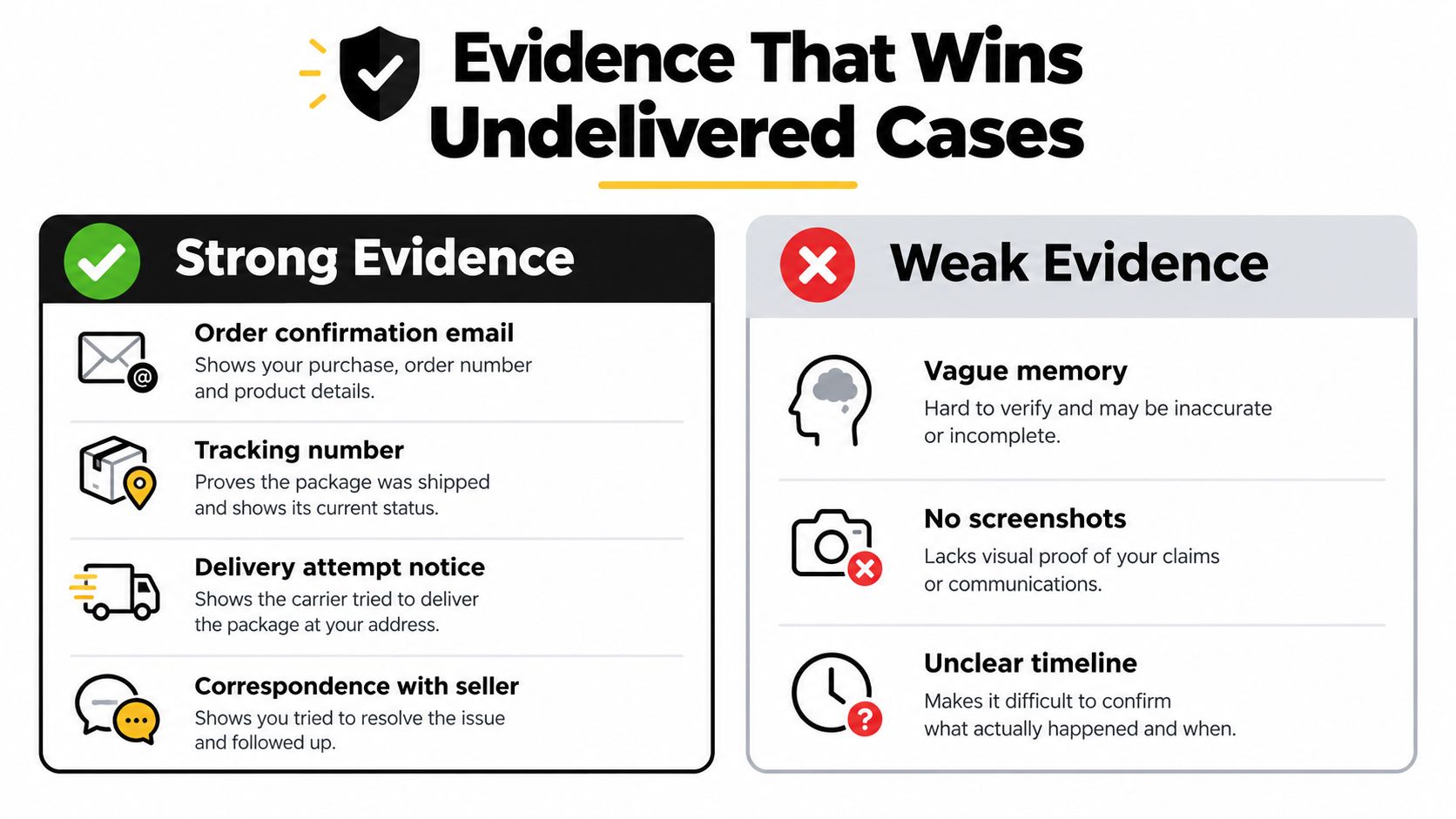
| Stronger record | Why it helps |
|---|---|
| Order confirmation and receipt | Identifies the purchase, amount, and merchant |
| Tracking history or delivery attempt notice | Documents what happened after shipment |
| Return tracking and merchant acknowledgment | Connects the return to the seller's possession of the item |
| Dated correspondence about a promised refund | Shows what the merchant committed to and when |
| Saved product description or policy | Helps establish what was represented when you bought |
A vague memory that “the package never showed up” is weaker than a delivery timeline, seller messages, and an order confirmation that all point to the same purchase. Likewise, a screenshot with no date or merchant context may be hard to interpret. Make the file easy to follow, and mark the exact amount you're contesting.
This is the gap that statement-only reviews miss. When purchase emails, delivery updates, return deadlines, and refund promises sit in different places, it's easy to lose track of the evidence or notice the problem late. The CFPB's guidance on fixing mistakes in a credit-card bill recognizes issues such as goods not received or accepted, and underscores the value of describing the error clearly. Keep paying undisputed portions of the bill, and preserve a dated record of each attempt to resolve the issue.
What Happens After You File and How to Escalate
After you submit a credit-card billing dispute, the issuer should send written acknowledgment unless it resolves the matter sooner. It may ask for more documents, so watch your mail, email, and account messages. If you receive a request, answer directly and send only material that supports the issue you reported.
A temporary credit, if the issuer provides one, isn't necessarily a final decision. The investigation may end with a full credit, a partial adjustment, or a denial. Read the explanation closely. If the issuer says it couldn't verify your claim, add the missing records and ask how to submit additional evidence. If the merchant's records contradict yours, compare dates, delivery details, and the promised refund terms before deciding whether another appeal is useful.
Keep a complete copy of the submission and every reply. If a refund is approved, check the account to confirm it appears; a written decision and a posted credit aren't the same thing. A practical guide to tracking a refund can help you keep the follow-up from slipping through the cracks.
If the investigation stalls, contact the issuer and ask for the dispute team or a supervisor. You can also submit a complaint to the Consumer Financial Protection Bureau about a problem with a financial product or service. For a merchant dispute, continue to press the seller with a concise timeline and supporting records. Small-claims court may be an option for unresolved losses, but weigh the effort and applicable rules before pursuing it.
Catching Disputable Charges Before the Clock Starts
The easiest dispute to manage is the one you notice while the evidence is still close at hand. A statement shows the charge, but it may not show the delivery promise, return deadline, or merchant message that explains what went wrong. Reviewing connected records can help you catch a missed refund or duplicate charge before you're scrambling to reconstruct the story.

A useful monitoring routine connects the dots between transactions and purchase records. For example, a refund confirmation can be checked against later transactions, a return deadline can be surfaced before it passes, and a delivery update can be compared with the merchant's stated guarantee. Finding all your subscriptions also helps identify recurring charges that may be unfamiliar or no longer wanted.
Don't wait for the statement to become a monthly mystery. Check new transactions, save merchant messages when something goes wrong, and set a reminder for any promised refund or return window. That simple habit gives you time to contact the merchant, gather evidence, and notify your issuer without turning the deadline into a last-minute scramble.
Compass+ monitors connected financial, email, calendar, and shopping accounts to flag opportunities such as refunds owed, duplicate charges, missed delivery credits, and return deadlines, with a concrete next step for each finding. If you want help spotting issues while the records are still fresh, visit Compass+ to learn more.