Flexing the Budget in 2026: Seven Practical Steps
Seven practical ways to start flexing the budget in 2026: recover refunds, trim subscriptions, catch duplicate charges, and build a buffer for surprises.
13 min read

Your budget balances on paper. Then the car needs a repair, an annual subscription renews without warning, and a card statement shows the same charge twice. Nothing about your rent, groceries, or childcare changed, but you've suddenly got no room to move.
That's usually not a spending problem. It's a flexibility problem. Money has leaked out through forgotten renewals, money you're owed hasn't come back, or a predictable annual bill arrived as if it were a surprise. Cutting essentials is the hardest fix and often the wrong first one.
Flexing the budget means creating room from money that's already recoverable, reversible, or committed too early. The scale makes small wins worthwhile. The Bureau of Labor Statistics consumer expenditures report shows U.S. households spent an average of $77,280 in 2023, up 5.9% from 2022. At that level, trimming or recovering even a small share frees real cash without touching what you value.
Start with what's owed to you, then stop the quiet leaks.
Table of Contents
- 1. Recover Unclaimed Refunds and Late-Delivery Credits
- 2. Subscription Audit and Free-Trial Tracking
- 3. Post-Purchase Price Drop and Price Adjustment Claims
- 4. Duplicate Charge and Bill Creep Detection
- 5. Return Window and Renewal Date Calendar Tracking
- 6. Zero-Based Budgeting with a Flexible Buffer
- 7. Sinking Funds for Annual and Irregular Expenses
- How the Seven Budget Flexibility Strategies Compare
- Turning Small Wins Into Lasting Flexibility
1. Recover Unclaimed Refunds and Late-Delivery Credits
Most households treat a delivered order as closed. I don't. If a carrier or retailer promised a delivery date or service level and missed it, that order may still hold recoverable money, and treating it as a budget line is the fastest way to add flexibility without cutting anything.
Say you paid for expedited shipping and the package arrived two days late. UPS and FedEx service guarantees let shippers request refunds when delivery commitments are missed. Retailers also issue refunds or store credit after a confirmed late or damaged delivery. The catch is always the same. Nobody sends the money automatically, and the claim window closes whether you noticed or not.
The Federal Reserve economic well-being report found 63% of adults could cover a hypothetical $400 emergency expense using cash, savings, or a credit card they'd pay off at the next statement. That means a few recovered credits aren't trivia. They're often the difference between absorbing a surprise and borrowing for it.
Make Claims a Routine, Not a Hunt
- Save the promise: Keep the order confirmation and stated delivery date together in one folder or note.
- Set the deadline immediately: Add a calendar reminder for the claim deadline the day a delivery arrives late.
- Log every recovery: Record each amount in your budget so your flexible pool grows visibly.
Practical rule: If you can't find the promised date, you probably can't win the claim. Save it at checkout, not after the problem.
Check your most recent paid shipping order today, compare the promised and actual delivery dates, and file a claim if they don't match.
2. Subscription Audit and Free-Trial Tracking
Recurring charges are where budgets stiffen. A 2025 CNET and YouGov survey reported Americans spent nearly $1,100 annually on subscriptions, with about $200 going unused. That's not a discipline lecture. Autopay, scattered billing dates, and awkward cancellation paths do most of the work for the merchant.
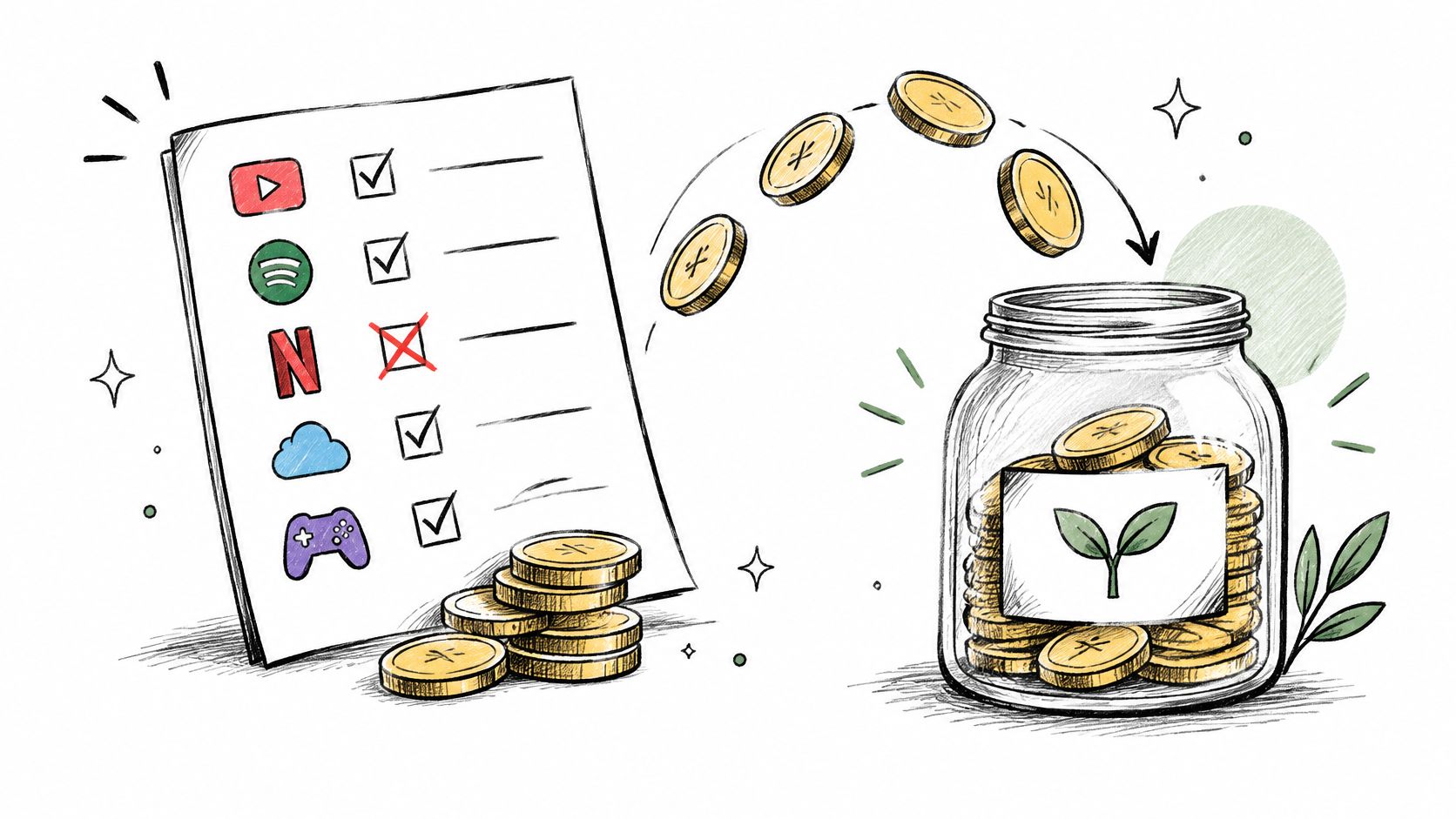
Work through it as a keep, reduce, cancel decision, not a purge. Say a household lists five streaming and app subscriptions. Two get used daily, one is watched only for a single show, and two haven't been opened in months. Cancelling the two dead ones and pausing the occasional one frees monthly cash without changing daily life at all.
Free trials need different handling because the decision date arrives before the charge. Set a reminder two to three days before each trial ends, while cancelling is still free. This guide on avoiding free-trial charges before they convert covers the reminder setup in detail.
Before you cancel anything outright, check for a cheaper tier, pause option, or annual discount. Downgrading a plan you still use beats cancelling and rejoining at a higher price later.
Pull up your last card statement now, highlight every recurring charge, and put a trial or renewal reminder on the calendar for the next one due.
3. Post-Purchase Price Drop and Price Adjustment Claims
A purchase price isn't always final. Some retailers refund the difference if an item's price falls within a set window after you buy it, and others match a competitor's lower advertised price. Most buyers never check, so the money stays with the store.
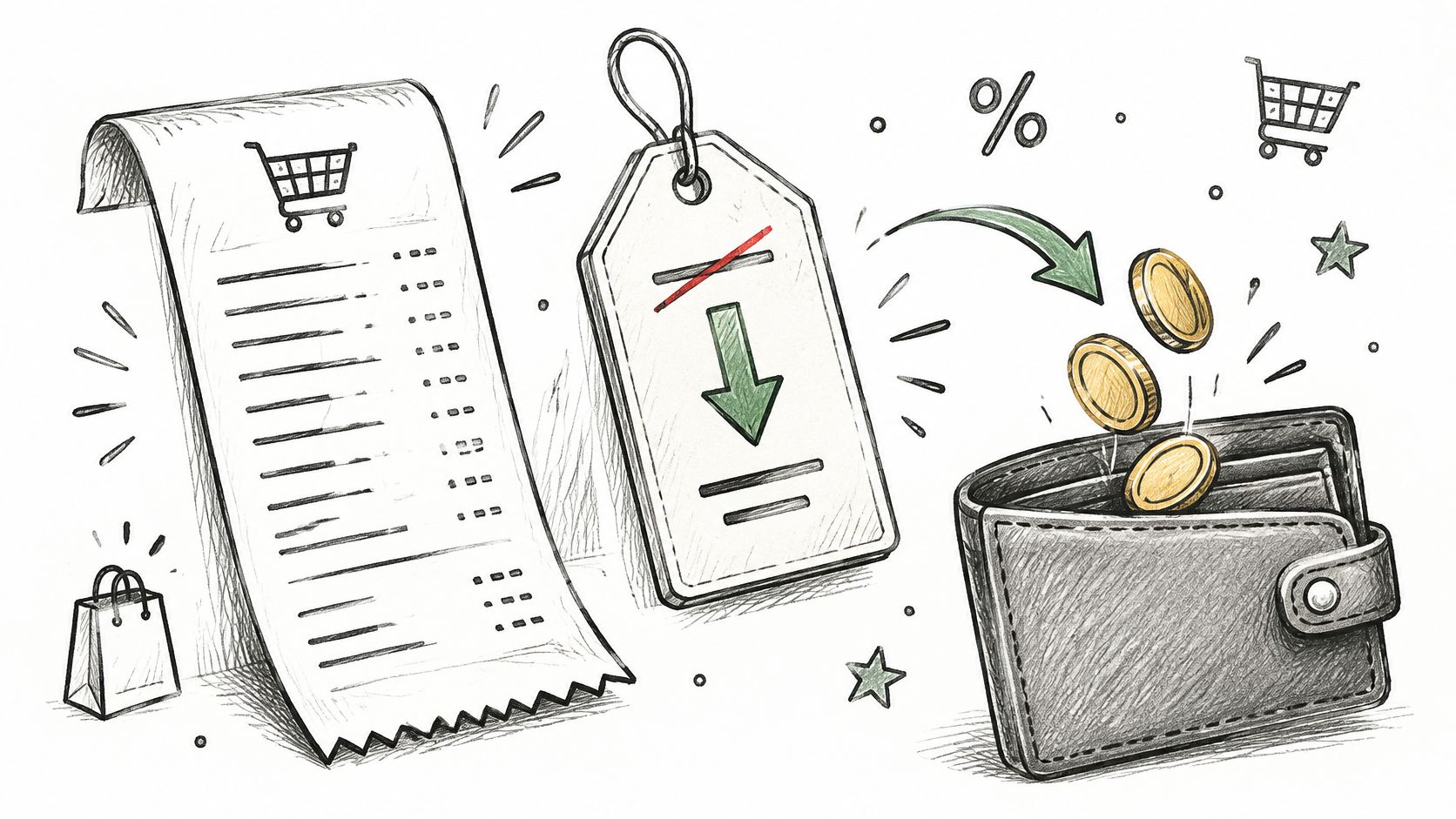
Take a television bought at full price. Two weeks later the same model drops for a sale. If you're inside the retailer's price adjustment window, a short request with your receipt and a screenshot of the new price can return the difference. That credit lands in the same month as the original purchase, which is exactly when your budget needs the offset.
Protect High-Value Purchases
The policy check belongs before checkout, not after a price drop. Note the window in your calendar, keep dated screenshots of both prices, and check the item again at the midpoint of the window. These price adjustment policies and claim windows vary a lot by retailer, so don't assume one store's terms apply to another.
The same habit works beyond retail. When a large recurring bill feels fixed, it often isn't, and it's worth taking a moment to compare rates for lower auto premiums rather than accepting the renewal price in front of you.
Pick your largest purchase from the past month, check its current price, and submit an adjustment request today if it's dropped.
4. Duplicate Charge and Bill Creep Detection
Bill creep rarely announces itself. A plan rises by a few dollars, a promotional rate expires, or a fee appears under a slightly different name. Because the bill still gets paid on time, nobody questions it.
The Adyen Index digital report from a 2024 survey of 34,371 adults across 23 countries found 80% of consumers had at least one subscription, averaging three subscriptions at $19 per service per month. With that many recurring charges moving at once, a small increase on each one adds up before you feel it.
Duplicates are blunter. Say the same utility or app charge appears twice in one week for the same amount. That's a dispute, not a budget adjustment. Screenshot both transactions, contact the merchant first, and escalate to your bank with dates if it isn't reversed quickly.
A bill that rises a few dollars a month costs you real money over a year. Annualize every increase before you decide it's too small to challenge.
A Monthly Comparison That Works
- Compare three months back: Line up each recurring bill against the previous three months and flag any change.
- Ask for the current best rate: Call cable, internet, or phone providers and ask directly for a retention or loyalty rate.
- Document every dispute: Keep dates, names, and reference numbers in case the bank needs follow-up.
Open last month's statements today, scan for any amount charged twice, and call one provider whose bill has crept up.
5. Return Window and Renewal Date Calendar Tracking
A purchase stays flexible only while you can still reverse it. Return periods, warranty deadlines, and renewal dates are all decision windows, and most households lose them because the date lived in an email nobody reopened.

Enter the return deadline when you place the order, not when the box arrives. Delivery delays eat into the window, and counting from arrival gives you a false sense of safety. Say you buy a small appliance with a 30-day return window. A reminder ten days before it closes forces an honest question while you can still act. Are you using it, or is it sitting in a cupboard?
Use two reminders, one a week before and one two days before, and attach the receipt and order number to the calendar event. For shared households, one shared calendar stops the classic problem where each person assumes the other returned it.
Renewals deserve the same treatment. Annual software, memberships, and insurance should sit on that calendar with time to compare alternatives, which is why it pays to review your car insurance before renewing instead of letting the policy roll over unexamined.
Add your next three renewal or return deadlines to a shared calendar today, each with its receipt attached.
6. Zero-Based Budgeting with a Flexible Buffer
Zero-based budgeting assigns every dollar a job, including savings and debt payments, so nothing drifts unassigned. On its own it can be brittle. Add one deliberate category, a flexible buffer, and the same system bends instead of breaking.
Say a household sets aside a modest monthly buffer and a car repair lands mid-month. The buffer absorbs it, savings stay untouched, and no category has to be raided. For a freelancer with irregular payments, each payment gets assigned on arrival and leftovers flow into the buffer for slower weeks. If you're unsure what you can commit, work out how much you can safely spend before you set the buffer size.
The maintenance burden is the risk here. A September 2024 Corporate Insight survey found 62% of respondents had created a budget, but only 48% maintained one regularly. A buffer reduces that friction because small surprises no longer force a full budget rebuild.
Fund the Buffer From Recoveries
- Start small: Aim for one to two weeks of variable spending.
- Route windfalls in: Send recovered refunds and cancelled subscription savings straight to the buffer.
- Rebalance monthly: Review at month end and top it back up before adding new spending.
Create a buffer category today and move your next refund or cancelled subscription saving into it.
7. Sinking Funds for Annual and Irregular Expenses
Annual bills aren't emergencies. Insurance premiums, software renewals, holiday gifts, and back-to-school costs arrive on a schedule, yet they still blow up monthly budgets because they land as one large charge. Sinking funds fix the timing by spreading the cost across the months before it's due.
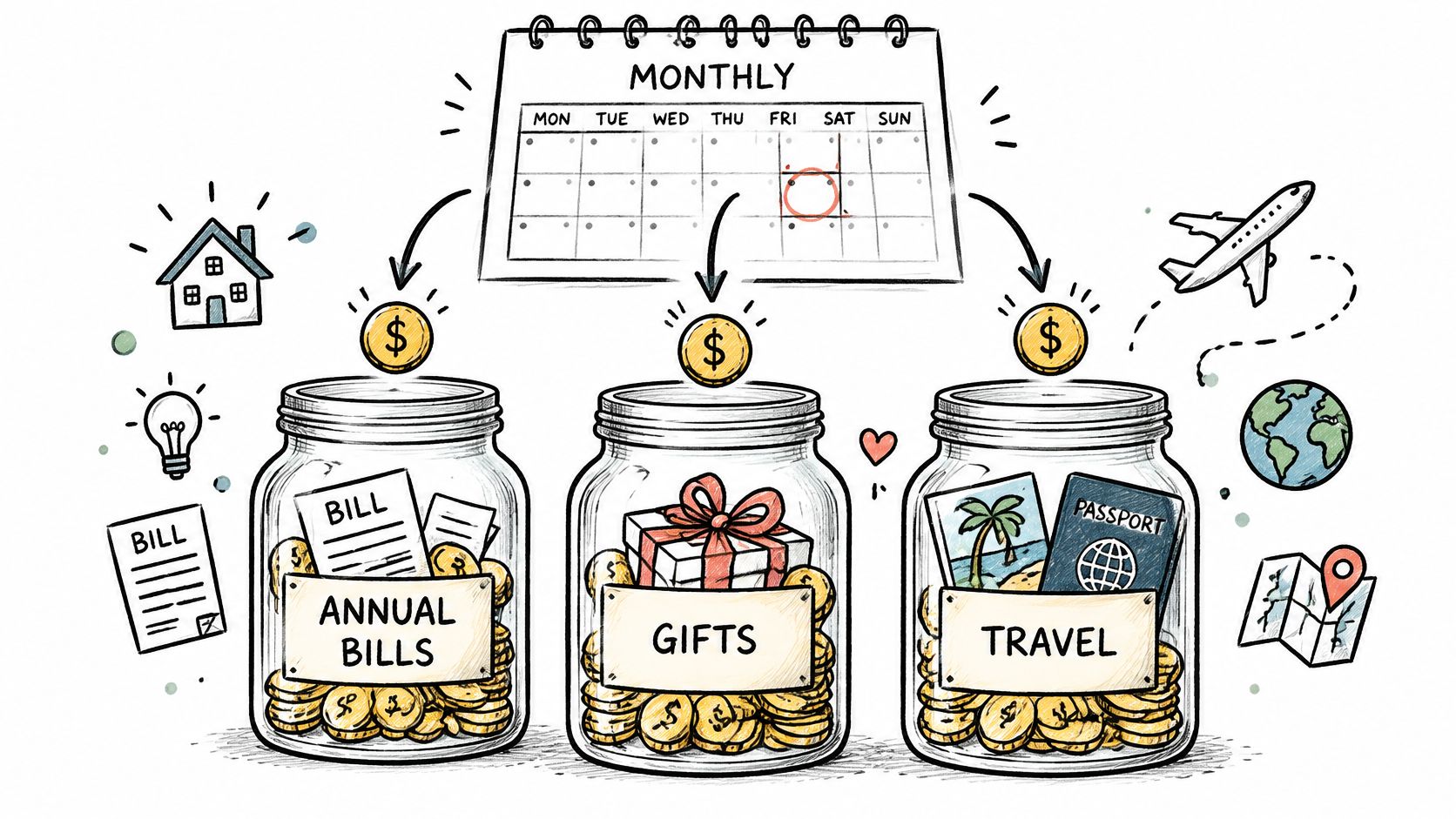
The math stays simple. Say an annual software renewal costs $300. Setting aside $25 a month pays it in full when due, with no scramble and no card balance. A family can run one fund for holiday gifts and school costs the same way, as long as the target reflects both.
Timing matters as much as totals. The Federal Reserve report on economic well-being in 2025 found 59% of adults faced at least one unexpected expense, most commonly a major vehicle repair, home or appliance repair, or medical expense. A budget can have enough annual income and still fail in the month everything arrives at once.
Where this breaks down: People fund the obvious annual bills and forget repairs. Add a general home and car repair fund even if the amount is rough.
List last year's irregular expenses, divide each total by 12, and automate one monthly transfer today, starting with the next bill due.
How the Seven Budget Flexibility Strategies Compare
| Item | Money Type | Effort Level | Best For |
|---|---|---|---|
| Recover Unclaimed Refunds and Late-Delivery Credits | Refunds and service credits | Low once set up | Claiming money owed under guarantees |
| Subscription Audit and Free-Trial Tracking | Recurring monthly savings | Moderate; repeat quarterly | Cutting unused subscriptions and avoiding trial charges |
| Post-Purchase Price Drop and Price Adjustment Claims | Refunds or store credits | Moderate; requires price checks | Recovering savings after a purchase |
| Duplicate Charge and Bill Creep Detection | Recovered overcharges and lower bills | Moderate; requires regular reviews | Catching billing errors and negotiating rates |
| Return Window and Renewal Date Calendar Tracking | Avoided charges and recovered purchase costs | Low to moderate; requires reminders | Managing return, warranty, and renewal deadlines |
| Zero-Based Budgeting with a Flexible Buffer | Assigned income and budget reserves | High; requires monthly planning | Managing variable expenses while protecting goals |
| Sinking Funds for Annual and Irregular Expenses | Planned savings for future costs | Moderate; requires consistent contributions | Preparing for predictable, irregular expenses |
Turning Small Wins Into Lasting Flexibility
These seven steps work as one system, not seven separate chores. Recovered refunds and price adjustments bring money back. Subscription audits and bill creep checks stop money leaving unnoticed. Calendar tracking keeps purchases reversible and renewals negotiable while you still have options.
Where the recovered money goes decides whether the flexibility lasts. If a cancelled subscription saving just dissolves into general spending, you'll feel no difference next month. Route it into your flexible buffer and it becomes the cushion that absorbs the next repair, medical copay, or late paycheck without touching savings or adding debt.
Sinking funds handle the other half of the problem, timing. Annual premiums, gifts, and seasonal costs stop competing with ordinary monthly bills because you've already paid for them in small pieces. Together, the buffer absorbs what you can't predict and sinking funds prepay what you can.
Don't try to overhaul everything this week. Pick one action with a deadline attached. Check one recent order for a late-delivery credit, review one subscription before its next renewal, or compare one recurring bill against three months ago. Each takes minutes, and each either returns money or stops a charge.
The honest trade-off is attention. These checks only work if someone runs them consistently, and manual reviews tend to slip when life gets busy. That's why tools like Compass+ can help by monitoring linked accounts, email receipts, and calendars to surface refunds, duplicate charges, price drops, and renewal deadlines automatically, with an estimated amount and a concrete next step, so the review runs continuously rather than only when you remember.
Start with one recovery this week, send it to your buffer, and let the next small win build on it.
Compass+ monitors your linked financial, email, calendar, and shopping accounts to find refunds owed, late-delivery credits, price drops, duplicate charges, and low-use subscriptions, then pairs each finding with an estimated amount and a clear next step. If you'd rather have that budget flexing happen automatically instead of checking statements and inboxes yourself, visit Compass+ to join the waitlist and start surfacing money you're already owed.