DSW Return Policy Worn Shoes: What Gets Refunded in 2026
Can you return worn DSW shoes? Read the DSW return policy worn rules: unworn condition, 60-day window, receipt needs and steps to ask for a refund.
13 min read
Worn DSW shoes generally can't be returned for an ordinary refund because returns must be unworn and undamaged, even within 60 days. The other checks are your receipt or packing slip and the timing of the return.
Why focus on the deadline if the shoes won't pass the condition check? A receipt proves what you bought and when, but it doesn't turn an outdoor-worn pair back into returnable merchandise. Before you make the trip or pack a shipping box, inspect the shoes as carefully as the associate will.
Table of Contents
- Can Worn DSW Shoes Be Returned?
- How to Spot Wear Before You Return a Pair
- How to Start a Return In Store or Online
- Proof and Edge Cases That Change the Outcome
- What to Say When You Request a Return
- Your Decision Path Before You Return
Can Worn DSW Shoes Be Returned?
Worn shoes usually fail DSW's ordinary return requirements, regardless of how recently you bought them. The useful distinction isn't whether you briefly put them on. It's whether they remain unworn and undamaged after that try-on.
The DSW return and exchange policy sets a 60-day window for most merchandise to receive reimbursement through the original payment method with the original receipt or packing slip, provided the items are unworn and undamaged; after that window, eligible returns may receive merchandise credit instead. Without a receipt or packing slip, reimbursement is limited to merchandise credit at the current selling price, and DSW reserves the right to limit those returns.
Condition comes before reimbursement
Think of the deadline as the date on a rental-car agreement and the condition requirement as a separate inspection. Bringing a car back on time doesn't settle a problem with its condition. Likewise, showing an associate a recent receipt doesn't resolve visible wear on your shoes.
The comparison has limits: rental cars are meant to be driven, while an ordinary shoe return requires an unworn pair. But it helps separate the questions shoppers often combine: whether an item qualifies for return and how an accepted return will be reimbursed.
Trying on shoes on a clean store carpet generally leaves them effectively unworn. Walking outdoors can leave abraded soles, embedded grit, scraped heels, or established creases. Those signs matter more than whether the shoes still look attractive from above.
Practical rule: Start with whether the shoes qualify, not with where you want the refund sent.
An uncomfortable fit doesn't change that distinction. If you discover pressure across your toes while trying shoes on indoors, stop testing them before you mark the soles. Wearing them outside to see whether they'll stretch creates a real trade-off: you may learn more about comfort, but you risk losing the ordinary return option.
DSW return outcomes for worn and unworn shoes
| Scenario | Likely outcome | Deciding condition |
|---|---|---|
| Within 60 days, receipt, unworn and undamaged | Refund to original payment method | Condition and documents both met |
| Within 60 days, receipt, visibly worn | Likely refused as an ordinary return | Fails the unworn and undamaged requirement |
| After 60 days, receipt, unworn | Merchandise credit may be available instead of original payment | The original-payment deadline has passed; condition must still qualify |
| After 60 days, receipt, worn | Unlikely to be accepted | Outside the refund window and fails the condition requirement |
| No receipt or packing slip, unworn | Merchandise credit at current selling price, if accepted | DSW may limit no-receipt returns |
| No receipt, worn | Unlikely to be accepted | Missing documentation and visible wear both work against acceptance |
The table separates a late return from a worn return. A late but pristine pair may still qualify for credit. A worn pair does not become eligible just because you're willing to accept credit rather than money back.
The same caution applies to exchanges. Asking for another size isn't a workaround for shoes that fail the ordinary condition requirement. If you need “DSW return policy worn shoes” because you need a different fit, be ready to describe both the fit problem and how you tested the pair.
Use the scenario that matches your documents and purchase timing, then examine the actual shoes before deciding whether to bring them in.
How to Spot Wear Before You Return a Pair
Put the shoes under bright light, take out any removable insoles, and turn each shoe over. A pair can look nearly new on a shelf while the bottoms show obvious contact with pavement.
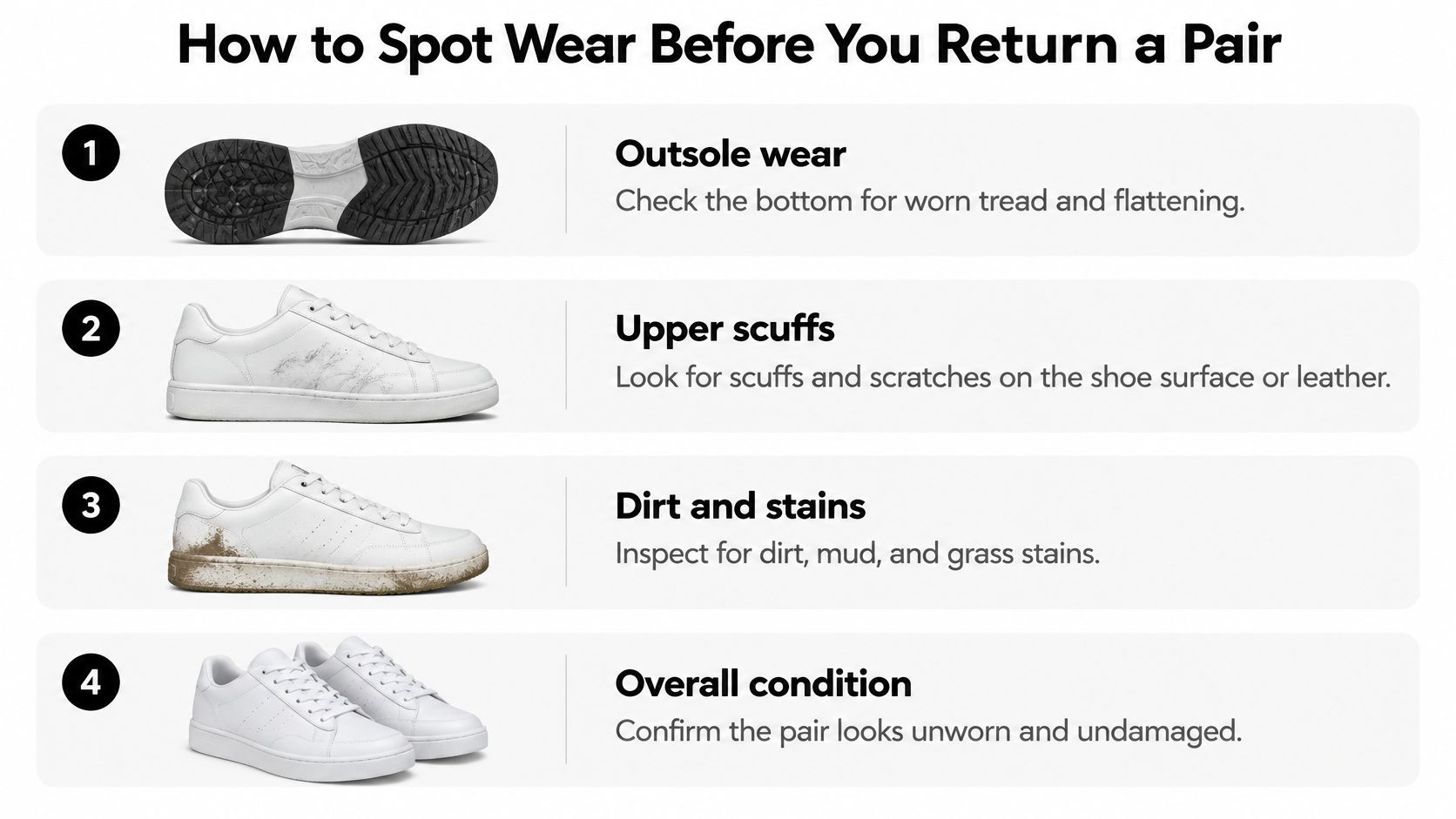
Inspect the surfaces that reveal use
- Outsoles: Look for flattened tread, roughened rubber, embedded grit, and scraped edges.
- Uppers: Check leather, fabric, and synthetic panels for scratches, scuffs, or abrasion.
- Dirt and stains: Inspect seams and grooves for mud, grass residue, and salt marks.
- Toe box and vamp: Look for creases that remain when the shoe is empty.
- Footbeds: Check for darkening, toe impressions, or a compressed heel area.
- Heels: Compare the rear edges for heel drag and check the heel counters for collapse or rubbing.
- Odor: Notice sweat or outdoor-use smells rather than masking them with fragrance.
- Contents and packaging: Gather tags, original insoles, the box, and tissue paper; flag anything missing.
Missing packaging isn't the same thing as outsole wear, but keeping everything together makes the purchase easier to identify and assess. Don't treat a replacement box as a cure for a worn pair.
Remove loose dust, not evidence
Brush off loose dust with a soft shoe brush and gently wipe superficial dirt from the sole with a lightly damp cloth. Don't sand the bottoms, polish away damage, glue loose parts, or apply sole dressing to make used shoes look new.
Specialty footwear can require maintenance rather than a return. For bowling shoes you're keeping, Bowling Gear Reviews offers a bowler's guide to safer slides; sole replacement belongs to that maintenance decision, not preparation for an ordinary refund.
The pair should look like it was only tried on. If you'd hesitate to show a mark to an associate under bright lights, disclose it rather than trying to hide it.
How to Start a Return In Store or Online
Prepare the purchase record before choosing a return channel. An in-store visit lets an associate inspect the shoes while you're present; mailing them requires clearer documentation because you won't be there to explain their condition.
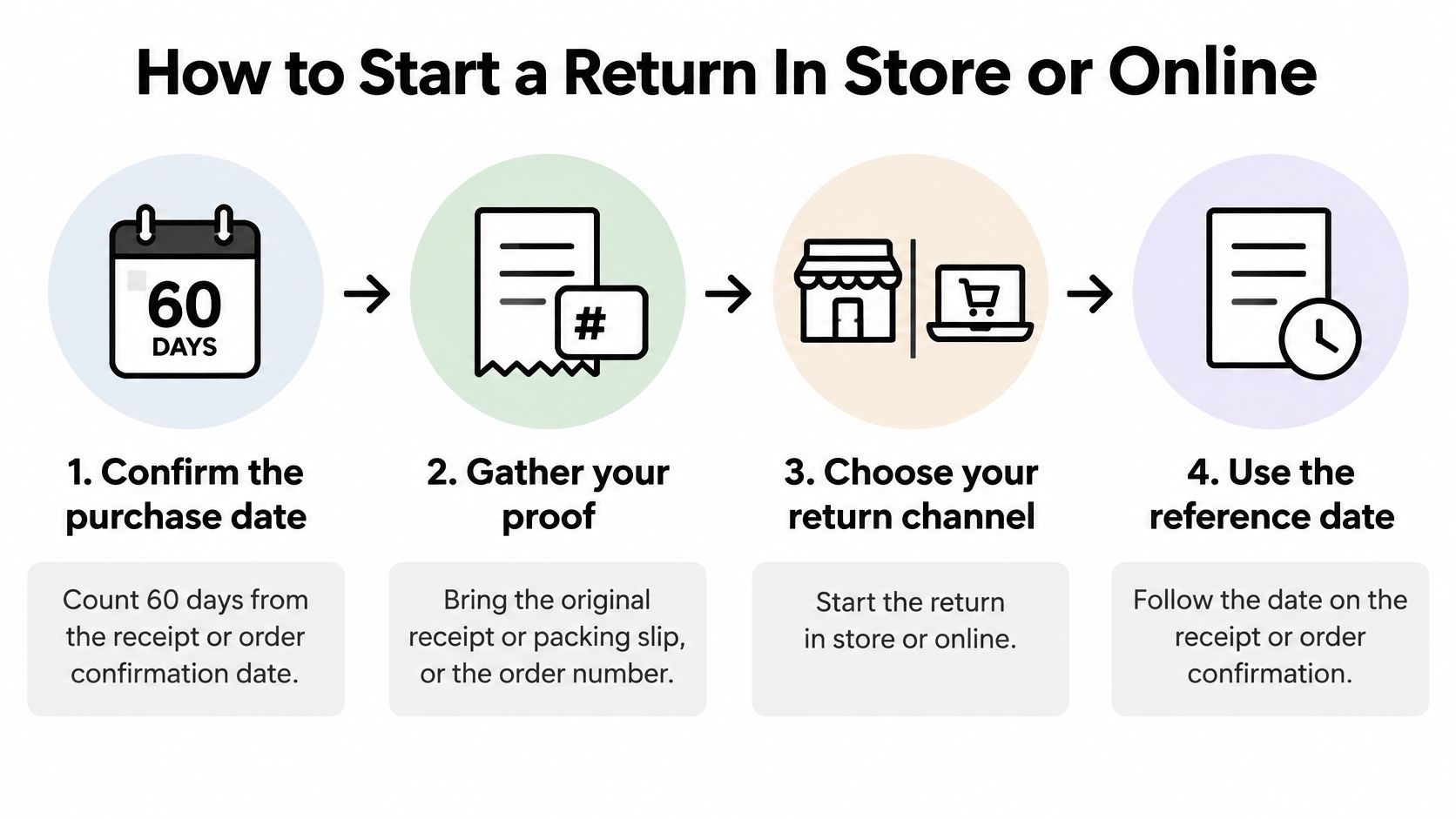
Prepare the purchase and the pair
Find the purchase date. Use the receipt or order confirmation rather than your memory of when the shoes arrived or when you first wore them. Check the return eligibility shown for that purchase before arranging your trip or shipment.
Gather proof of purchase. Bring the original receipt or packing slip, and have the order number accessible for an online purchase. An order number helps staff locate a transaction, but don't assume it automatically replaces the documentation required for your preferred reimbursement.
Record the current condition. Photograph the soles, uppers, and any questionable area before packing. Remove loose dust, but leave repairs and cosmetic treatments alone so the reviewer can assess the shoes accurately.
For occasion purchases, separate the fitting from the event itself. If you're coordinating shoes with an outfit, bridal shopping advice from California Cowboy offers related planning context; test the outfit together indoors rather than using the occasion as your fit trial.
Choose the channel and preserve the record
Check available return methods. Review your order page or contact DSW before assuming a particular store or shipping method can handle the purchase. I would favor an in-store assessment when the condition is borderline, because you can explain the issue and hear the decision directly.
Get confirmation of acceptance. In store, ask for a return receipt showing the item and reimbursement method. For a mailed return, follow the order's instructions, keep shipping proof, and save the return authorization or confirmation.
Follow the reimbursement through. Keep the records until the money or merchandise credit is available. If an accepted refund doesn't appear, use this guide on how to track a refund to organize the merchant confirmation and payment records before following up.
A shipping scan proves that you sent a package, not that DSW approved its contents. Keep the condition photos and purchase documents together so a delivery question doesn't become a separate search for evidence.
Proof and Edge Cases That Change the Outcome
A sole separating during initial use isn't the same issue as a sole worn down through walking. A suspected defect needs a defect assessment, not an attempt to describe visibly used shoes as unworn.
Situations worth a separate review
- Suspected manufacturing defect: Stop wearing the shoes, photograph the separation or failed stitching, and contact customer service before repairing anything. Explain what failed and how the shoes were being used, without assuming the fault guarantees reimbursement.
- Gift purchase: Ask what proof DSW can accept, such as a gift receipt or information from the buyer's account. Confirm the reimbursement arrangement before involving the gift giver unnecessarily.
- Sale or clearance purchase: Check the item's actual return terms on the receipt or order. A reduced price alone doesn't establish eligibility or an exclusion.
- Marketplace or third-party order: Identify the seller named on the confirmation and ask which return process governs the purchase. Don't ship to DSW merely because the product listing mentioned the brand.
- Transit damage: Photograph the shipping carton, internal packaging, and damaged shoes, then report the problem promptly. Keep the packaging until customer service tells you it's no longer needed.
- Purchase outside the ordinary refund window: Ask whether merchandise credit remains available for an otherwise qualifying pair. Don't assume an older purchase has no return value.
Separate product problems from payment problems
If your statement also shows an unexpected extra transaction, investigate it separately from the shoe's eligibility. Guidance on a duplicate charge on a bank statement can help you distinguish a payment issue from a merchandise-return dispute.
An exception isn't approval. Get the proposed resolution in writing, or keep the reference number and a note of what the representative agreed to review.
That record is especially useful when customer service asks a store or another team to inspect the shoes.
What to Say When You Request a Return
Clear wording helps the reviewer identify the purchase and understand the request. It can't override visible wear, but it can prevent a fit concern, suspected defect, or missing-document issue from being misunderstood.
At the store counter
I bought these on [purchase date], and this is my [receipt or order number]. They don't fit properly, and I tried them on [describe where and how]. Could you check whether their condition qualifies for a return?
The essential detail is how you tested the shoes. Say you walked outside if that's what happened; don't call them unworn while asking the associate to overlook pavement marks.
Have the shoes and documents ready together. A short factual opener works better than a long account of why you need the money back, because the associate still has to assess eligibility.
In an online or chat request
I'd like help reviewing order [order number], purchased on [purchase date]. The shoes have [accurate condition description]. I've attached photos of the soles, uppers, and [specific fault, if relevant]. Please confirm the appropriate return or defect-review process.
The important element is a description that matches the photographs. For example, distinguish a scuffed toe from stitching that has pulled apart, and explain whether the issue appeared during a try-on or later use.
Don't send only a close-up that hides the rest of the shoe. A full-pair photo plus a clear view of the problem gives the reviewer useful context.
If the return is refused
Could a supervisor or customer-service representative review this decision? I have the purchase record and condition photos. Please explain which requirement isn't met and provide the decision or case reference in writing.
Ask for the specific reason for refusal, rather than just another person who might say yes. If the reviewer identifies visible wear, repeating that the purchase was recent won't answer that concern.
Stay calm and keep the request narrow. A second review makes sense when someone overlooked documentation or misunderstood a possible defect; it isn't a promise that another reviewer will reverse a correctly applied condition rule.
Your Decision Path Before You Return
Make the decision in the order that prevents wasted effort: assess the pair, identify the kind of request, then decide whether the available outcome is worth pursuing. Don't spend time arranging shipping before you know what you're asking DSW to review.
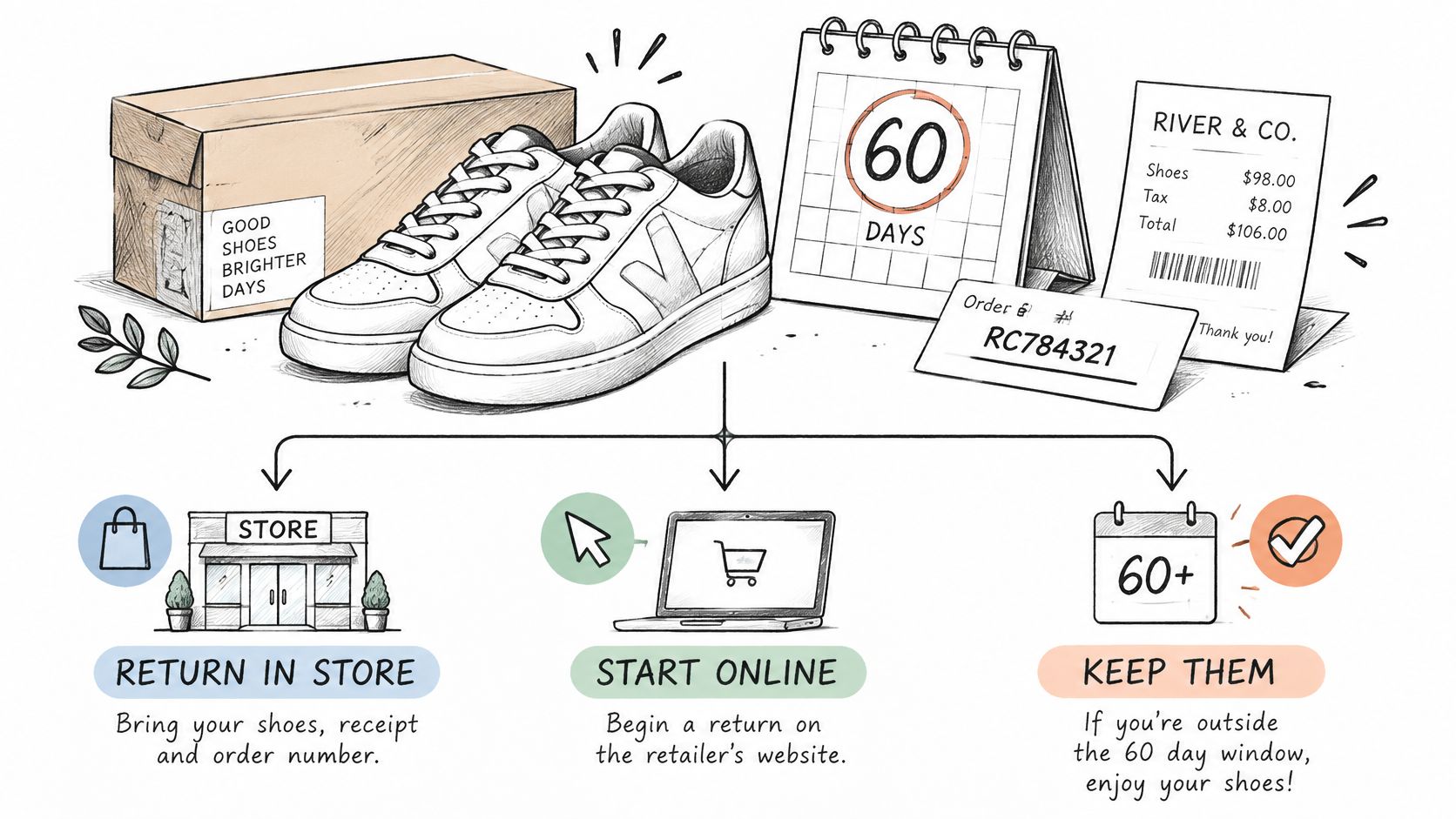
Match the request to the evidence
- If the pair looks unworn and undamaged: Check the purchase's eligibility and gather the receipt or packing slip. Choose an available return channel and retain the acceptance confirmation.
- If the pair is worn and something failed: Preserve the fault with photographs and request a defect review. Don't repair it first or present it as an ordinary unused return.
- If timing or documentation is the obstacle: Ask whether merchandise credit is available before making a special trip. Compare that option with keeping the shoes or selling them with an honest condition description.
- If the pair shows ordinary use: Expect a low chance of an ordinary refund. Further cleaning won't change the underlying eligibility, and repeated store visits won't supply missing evidence.
Protect the remaining opportunity
Set a calendar reminder before the return deadline, leaving yourself room to resolve missing documents or channel questions. Save the receipt and order confirmation somewhere you can retrieve them without searching through unrelated messages.
The most useful action today is simple: confirm the purchase date and find the receipt or order number before the shoes are cleaned or moved. That preserves your evidence without promising an outcome the condition of the shoes may not support.
Compass+ monitors connected accounts for return windows and promised refunds, then pairs findings with concrete next steps. If keeping track of purchase deadlines and reimbursement confirmations is the difficult part, visit Compass+ to explore the service and join the standalone experience's waitlist.