Crate and Barrel Return Policy: What to Know
Learn the full Crate and Barrel return policy, including the 30-day window, proof requirements, online vs. in-store steps, and tips to maximize your refund.
12 min read
Crate and Barrel gives you 30 days from receipt to return or exchange eligible merchandise, and the item has to be new, unused, resalable, with valid proof of purchase. The part most shoppers miss is that the policy hides four cost and channel variables that can shrink what you get back.
You're usually standing there after the boxes have already piled up. The sofa looked right in the showroom, or the chair looked fine online, then it lands in your house, and suddenly you're deciding whether the hassle of sending it back is worth more than the mistake itself.
Table of Contents
- The 30-Day Clock and What It Really Costs You
- The Four Variables That Decide Your Refund
- Which Door You Have to Walk Through
- Returning In Store Without Surprises
- Returning Online Orders by Mail
- The Gray Zones the Policy Page Skips
- Habits That Actually Move the Refund Odds
The 30-Day Clock and What It Really Costs You
You buy a sofa online, the delivery team leaves, and nine boxes sit in the garage. Two days later, the gray reads wrong in your light, and now you're racing a clock that started on receipt, not on the day you finally opened every carton. That's the first trap in the crate and barrel return policy. The deadline sounds simple, but it rewards fast unboxing and punishes delay.
What the clock actually measures
Crate and Barrel's rule is straightforward on paper, eligible merchandise must be returned or exchanged within 30 days of receipt, in new, unused, resalable condition, with valid proof of purchase. That rule applies to both store and online transactions. The receipt date matters because it's the date the company uses, not the date you noticed the problem.
That distinction hurts buyers who wait to assemble, inspect, or test a piece. If you leave a boxed item untouched in a corner, you're not buying yourself extra time, you're burning it.
The hidden cost is time, not just calendar days
The policy page gives you a deadline, but it doesn't erase the practical delay of finding a store, repacking bulky merchandise, or arranging a shipment. For customers dealing with large furniture, the practical window is shorter than the printed one because transportation takes time and the return may need more coordination than a normal parcel drop-off. That's why you should treat day one as inspection day, not decision day.
Practical rule: if the item is expensive, awkward, or likely to disappoint, inspect it immediately and decide fast. Waiting only helps the clock, not your refund odds.
The Four Variables That Decide Your Refund
Think of every Crate and Barrel return as a gate with four locks. If one lock fails, the whole return becomes harder, slower, or outright denied. The four variables are time, condition, proof, and channel.
Time and condition come first
The item has to be inside the 30-day window and it has to be new, unused, and resalable. A pristine box outside the deadline is still a problem. A used item inside the deadline is also a problem. That's not shopper-friendly, but it is how the rule works.
People often fool themselves in this case. They think a clean item should pass because it “looks fine.” Staff don't evaluate returns by vibes, they look for signs that the product can be put back into stock.
Proof is not optional
Crate and Barrel accepts several forms of proof, including an original receipt, packing slip, order number, electronic order confirmation, or gift-registry number. If you can't support the purchase, you've weakened the return before anyone checks the item itself.
Keep the proof visible and easy to pull up. A lost email thread and a missing paper receipt are the kind of avoidable mistakes that turn a simple counter visit into a dead end.
Channel determines where the item goes
The purchase origin matters. Crate and Barrel products generally go back to a Crate and Barrel store, while outlet merchandise goes to an outlet location. Online and phone orders may qualify for mailed returns. If you choose the wrong channel, the staff can turn you away even when the item itself is acceptable.
If you can satisfy all four variables before you leave home, you're in good shape. If you miss one, assume the outcome is already leaning against you.
Which Door You Have to Walk Through
Most return frustration comes from showing up at the wrong place. Buyers assume “store” means any store with the right name on the sign. Crate and Barrel doesn't treat it that loosely. The return door is tied to the purchase type, and that's where a lot of shoppers get stuck.
Match the purchase to the destination
| Purchase type | Where to return | Typical refund method | Who pays return shipping |
|---|---|---|---|
| Crate and Barrel store purchase | Crate and Barrel store | Refund, exchange, or credit subject to eligibility review | Customer, if shipping is used |
| Crate and Barrel outlet purchase | Outlet location | Refund, exchange, or credit subject to eligibility review | Customer, if shipping is used |
| Online or phone order | Mailed return if eligible, or the channel the company directs you to use | Refund to the original payment method or other outcome subject to eligibility review | Customer |
The important part is the middle column. A buyer with the right receipt can still get stalled if they walk the item to the wrong desk. Crate and Barrel is specific about where each product category belongs.
Why the wrong door costs more than gas
A wrong-store visit doesn't just waste a morning. It can also eat into the 30-day window while you sort out the correction. That matters most on bulky items, where hauling, repacking, or rebooking a car already adds friction.
If you want a broader operations lens on this problem, the returns guide for UK sellers is a useful comparison point because it shows how different retailers route returns by channel and category. The mechanics are different, but the lesson is the same, match the item to the correct return path before you move it an inch.
Returning In Store Without Surprises
The in-store path is the cleanest option when the item is eligible and you can get it to the right location. It's also the place where staff judgment shows up fastest. The register screen may say yes, but the associate still checks whether the item qualifies.
Bring more than the object itself
Bring the item, the tags if you still have them, and the original packaging when practical. Bring at least one accepted proof document too. Don't assume a barcode alone will save you if the rest of the return looks sloppy.
Associates tend to look hardest at condition, tags, and whether the item has clearly been used, assembled, compressed, scuffed, or exposed to smoke or pets. A chair that looks showroom-clean is easier than a blanket that came out of a house with a dog. The cleaner the presentation, the fewer questions you invite.
The discretion point is real
Crate and Barrel says refunds, exchanges, or credits remain subject to the company's assessment of eligibility. That's the moment the printed rule turns into a human call. You are not dealing with an automatic cash machine.
Store rule: don't walk in expecting a refund as a right if the item shows wear, missing components, or obvious handling damage. Staff can say no, and the policy gives them room to do it.
Gift-card or merchandise-credit outcomes can also feel different from a straight refund because they may resolve more easily on the spot, while a card refund still has to flow back through payment processing. If you're choosing between refund and exchange, be ready to say what you want before the associate starts the return. Hesitation invites more questions.
Returning Online Orders by Mail
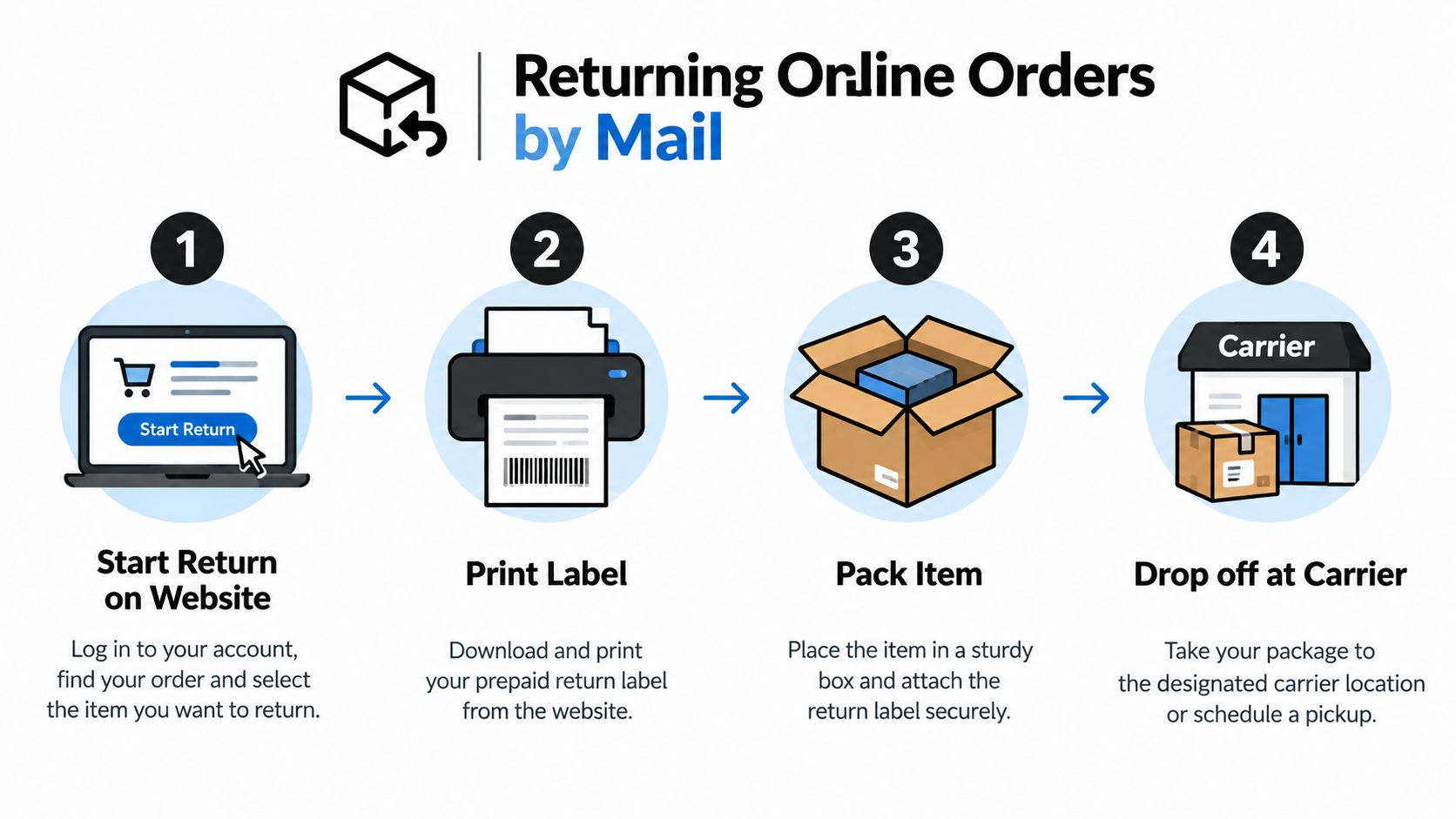
Mail makes sense when the item is eligible, easy to pack, and not worth a trip across town. It becomes a bad deal when the box is huge, the item is fragile, or you're already close to the deadline. A shipping label solves convenience, not timing.
Start early and document everything
For online or phone orders, the safest move is to start the return as soon as you know the item isn't staying. Print the label, pack the item tightly, and photograph the parcel before it leaves your hands. That gives you a record if the package is damaged, delayed, or questioned later.
A mailing label does not eliminate the financial drag of the return. Crate and Barrel says customers are responsible for return shipping costs, and shipping fees are not refunded. In plain English, you may be paying twice for transportation, once on the way in and again on the way out.
Don't wait for the credit to prove itself
If you're monitoring the refund after shipment, keep the confirmation trail organized. The internal tracking piece at how to track a refund is useful if you want a simple way to follow the money without guessing where the return sits in the process.
The practical move is to treat the return label as a cost, not a benefit. If the item is borderline and the label plus lost shipping charges eat most of the value, an exchange may make more sense than a return. If the item is large, ship only when you're sure, because every day you spend deciding is a day you're not getting back.
The Gray Zones the Policy Page Skips
The printed policy is neat. Real returns are messier. The problem cases are the ones that make shoppers argue at the desk because the item feels “close enough” to eligible, even when it isn't.
Gifts, damage, and special orders are where friction starts
A gift recipient with no clear proof of purchase is already on shaky ground, even if the item is unopened. Damage discovered after unboxing is also a different animal from a simple change of mind. If a delivery crew left a dent, tear, or broken piece behind, document it before the truck disappears.
Certain items are commonly treated more strictly, especially custom or made-to-order purchases. Those should be assumed risky unless the paperwork says otherwise. Don't buy with optimism and then act surprised when the desk says the item doesn't qualify.
Evidence beats memory
If something arrives wrong, the best thing you can do is create proof immediately. Take photos, save timestamps, keep delivery notes, and preserve the packaging until the issue is resolved. If you're dealing with a charge dispute or a statement mismatch, the internal note at duplicate charge on bank statement is a practical reminder that screenshots and receipts settle more arguments than explanations do.
For shoppers who want a broader view of how retailers communicate restrictions and exceptions, Fluidwave's 2026 pricing guide is a good parallel read on how policies can look simple while hiding operational limits behind them. That's exactly what happens here. The headline sounds generous, then the exception list determines the outcome.
Candid truth: the policy gives staff enough room to assess the return, so the burden is on you to arrive with proof, condition, and timing on your side.
Habits That Actually Move the Refund Odds
The shopper who walks into the return desk prepared gets a better outcome. The crate and barrel return policy still controls the decision, but the habits you bring with you make approval easier and reduce the chances of a stalled refund.
Five habits that help
Open the box carefully and photograph the sealed package before you touch anything. If the item shows damage later, that picture gives you a clean starting point.
Keep the order confirmation email where you can find it fast. A saved receipt, delivery note, or tracking record settles more disputes than a memory ever will.
Inspect large items as soon as they arrive, and do it while the return window still has room. Letting a sofa or table sit untouched is how people miss a problem until the deadline is already working against them.
Choose the lower-friction return channel. If the store is nearby, bringing the item back in person usually avoids the cost and hassle of mailing bulky merchandise, especially because return shipping is rarely where shoppers want to spend more money.
Plan big purchases around a week that gives you time to act. Travel, holidays, and packed calendars make even a generous return window feel tight.
If you want a system to surface missed credits and recurring waste, see how to find money you're owed or wasting.
If you want software to keep an eye on post-purchase money movement, Compass+ is one option. It monitors connected shopping, email, bank, and calendar accounts for refunds owed, refund confirmations, price drops, duplicate charges, and deadline issues, then flags concrete next steps.
Use that kind of tool alongside the policy, not instead of it. The return desk still decides what gets accepted, but organized records and deadline tracking make it harder for a valid refund to slip through the cracks.