10 Ways to Save on Gas in 2026
Discover 10 ways to save on gas, from smarter driving and route planning to fuel rewards, maintenance, and cutting unnecessary vehicle costs.
20 min read
A driving habit can waste more fuel than many drivers expect, even when the car, route, and fuel grade stay the same. Aggressive acceleration, speeding, hard braking, and unnecessary idling can turn an ordinary trip into an expensive one. The practical answer isn't one dramatic change. It's a stack of small decisions across four levers: pay less per gallon, use fewer gallons, drive fewer miles, and remove related recurring waste.
The list below starts with low-cost actions you can use immediately, then moves into route planning, rewards, monitoring, vehicle setup, and larger transportation decisions. Some changes affect your next fill-up. Others matter over months or years. Check your owner's manual for vehicle-specific recommendations, confirm local program rules before relying on a discount, and measure your own results instead of assuming every advertised estimate will apply to your car.
Table of Contents
- 1. Monitor Fuel Price Fluctuations and Time Fill-Ups Strategically
- 2. Optimize Driving Habits to Reduce Fuel Consumption
- 3. Maintain Proper Tire Pressure and Regular Vehicle Maintenance
- 4. Plan Routes Efficiently and Minimize Unnecessary Driving
- 5. Use Fuel Rewards Programs and Grocery Store Gas Partnerships
- 6. Use the Manufacturer-Recommended Octane Rating
- 7. Reduce Vehicle Weight by Removing Unnecessary Items
- 8. Use Telematics and Vehicle Tracking to Monitor Fuel Economy
- 9. Choose Fuel-Efficient Vehicle Options and Right-Size Transportation
- 10. Track Vehicle Subscriptions and Services to Eliminate Unnecessary Costs
- 11. Keep Maintenance Records and Fix Efficiency Problems Early
- 11 Gas-Saving Strategies Comparison
- Build Your Personal Fuel-Savings Stack
1. Monitor Fuel Price Fluctuations and Time Fill-Ups Strategically
The easiest way to lower a fuel bill is to avoid treating every gas station as interchangeable. Prices vary between nearby stations, and the difference can matter when you fill a large tank or refuel frequently. Use GasBuddy, Waze, or GetUpside to compare current prices along routes you already drive, then choose a reasonably priced station instead of stopping at the first convenient exit.
Don't make a separate trip just to chase a discount. Add price checking to a commute, grocery run, or planned errand. If your tank has enough fuel, wait for a better-priced stop that fits your normal route. If you're nearly empty, prioritize a safe, accessible station over a small potential saving.
A simple fill-up routine
- Check before leaving: Compare nearby prices in an app before you start driving.
- Use your regular routes: Track stations near home, work, and common errands.
- Watch rewards timing: Review grocery offers, digital receipts, and fuel-app promotions before paying.
- Avoid unnecessary detours: A cheaper pump isn't a saving if reaching it requires extra miles.
Keep the price-per-gallon decision separate from the total transportation budget. A spending review such as how much you can safely spend can help you see whether fuel is rising because of station prices, extra driving, or another recurring charge. That distinction tells you which lever to address first.
2. Optimize Driving Habits to Reduce Fuel Consumption
Smooth driving is one of the fastest ways to use fewer gallons without changing your commute or vehicle. The U.S. Department of Energy's guidance, summarized by Québec's eco-driving recommendations, says aggressive driving can lower fuel economy by 15% to 30% at highway speeds and 10% to 40% in stop-and-go traffic. The effect is especially important in urban driving, where repeated starts and stops create more opportunities for waste.
Start with acceleration. Press the pedal progressively, leave more space ahead, and anticipate traffic lights so you can ease off earlier rather than brake hard at the last moment. On highways, maintain a steady legal speed and use cruise control when road and weather conditions make it appropriate.
Practical rule: Treat every hard acceleration, unnecessary brake, and avoidable idle as a small fuel purchase.
Excess idling also deserves attention. The same guidance says a vehicle can burn a quarter to a half gallon per hour while idling, depending on engine size and air-conditioning use. Turn the engine off during an extended stationary wait when doing so is safe and suitable for the vehicle. Don't sacrifice visibility, climate safety, or road safety to chase a marginal saving.
3. Maintain Proper Tire Pressure and Regular Vehicle Maintenance
Tire pressure is a maintenance task with a direct connection to rolling resistance. Check the pressure when tires are cold, compare it with the vehicle manufacturer's recommended figure, and adjust it before long trips. Use the pressure listed on the doorjamb or in the owner's manual, not the maximum pressure molded into the tire sidewall.
A six-month analysis of 4,000 truck trips across 10 trucks found that moving average pressure from 106 PSI to the 110 PSI target improved fuel economy from 7.87 MPG to 8.49 MPG, a 7.9% gain, according to Continental's fleet analysis. Passenger-car drivers can use the same principle, though the result depends on the vehicle, tires, load, weather, and route.
Put maintenance on a schedule
- Check monthly: Inspect pressure and look for visible damage or unusual wear.
- Follow service intervals: Keep oil changes and filter replacements aligned with the manual.
- Watch alignment symptoms: Have the wheels checked if the car pulls or the tires wear unevenly.
- Record repairs: Note dates and mileage so maintenance doesn't become reactive.
EPA testing found that 3 to 4 PSI of underinflation can create about a 2% fuel-economy penalty, roughly 0.5 MPG for an average current-production vehicle, as documented in EPA testing on tire pressure and fuel economy. Check pressure before a trip, not after tires have warmed up from driving.
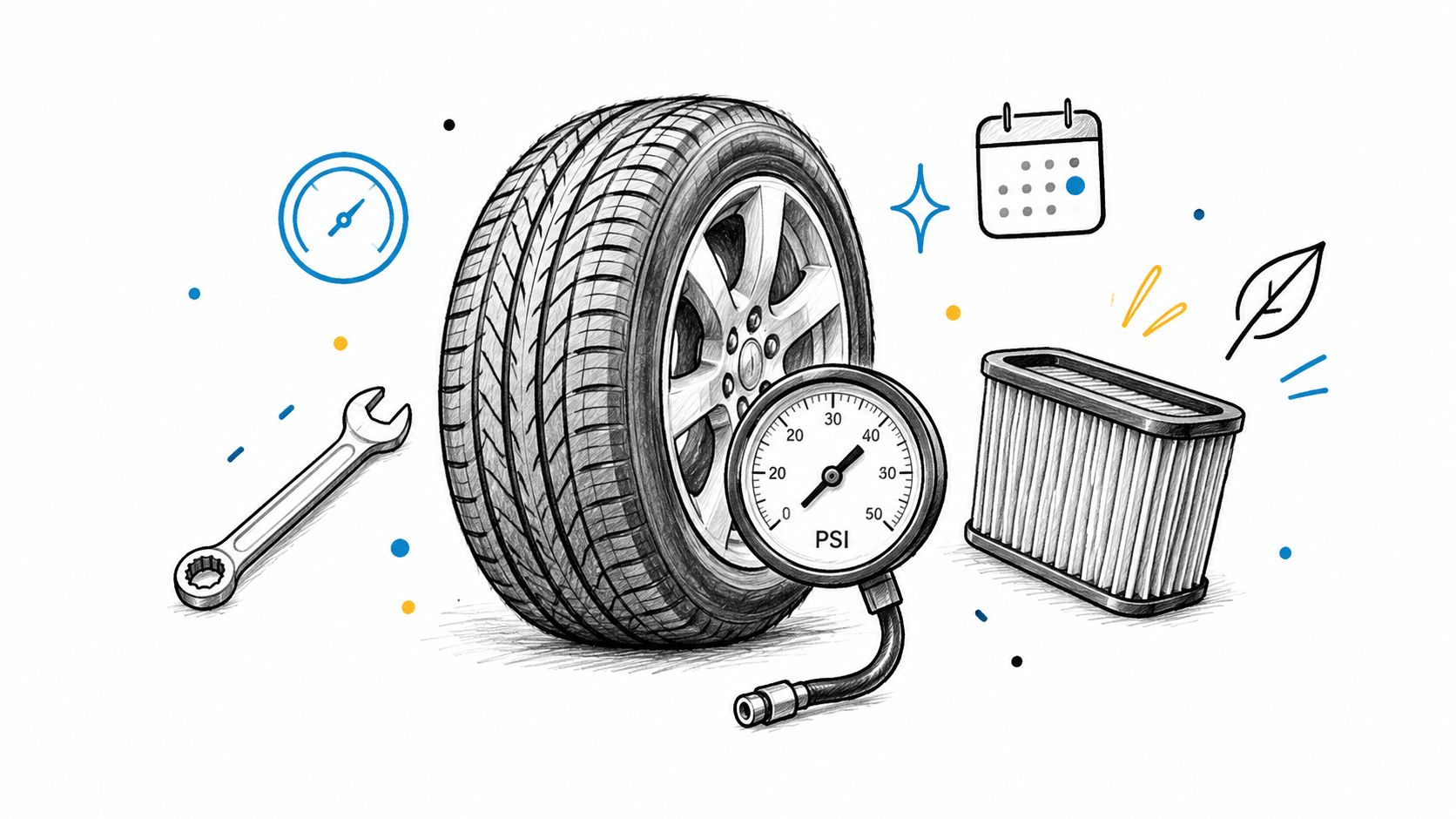
A maintenance reminder is useful, but it shouldn't replace the vehicle manual or a qualified technician's inspection.
4. Plan Routes Efficiently and Minimize Unnecessary Driving
Using fewer miles is the most direct way to use fewer gallons. Before leaving, group errands by location and sequence them so you aren't crossing the same area repeatedly. Put the farthest stop into a route that also covers nearby appointments, shopping, pickup, or returns.
Navigation apps can help you compare routes, but the fastest route isn't always the lowest-fuel route. A slightly longer path with fewer delays may be easier on fuel than a short route filled with stop-and-go traffic. Check Google Maps or Waze before departure, then reassess if traffic changes significantly.
Turn separate trips into one
- Batch errands: Combine groceries, pharmacy visits, returns, and appointments.
- Sequence geographically: Finish nearby stops together before moving to another area.
- Share journeys: Carpool for leisure, shopping, and regular activities when schedules align.
- Replace avoidable trips: Use delivery, pickup, mail service, or online appointments when the convenience outweighs the fee.
- Choose one-stop shopping: A single store can replace several specialty stops.
Don't drive farther to save a small amount at the pump. Compare the discount with the extra distance, time, and traffic. The strongest route strategy is usually the one that fits an existing trip and removes backtracking rather than creating a new detour.
5. Use Fuel Rewards Programs and Grocery Store Gas Partnerships
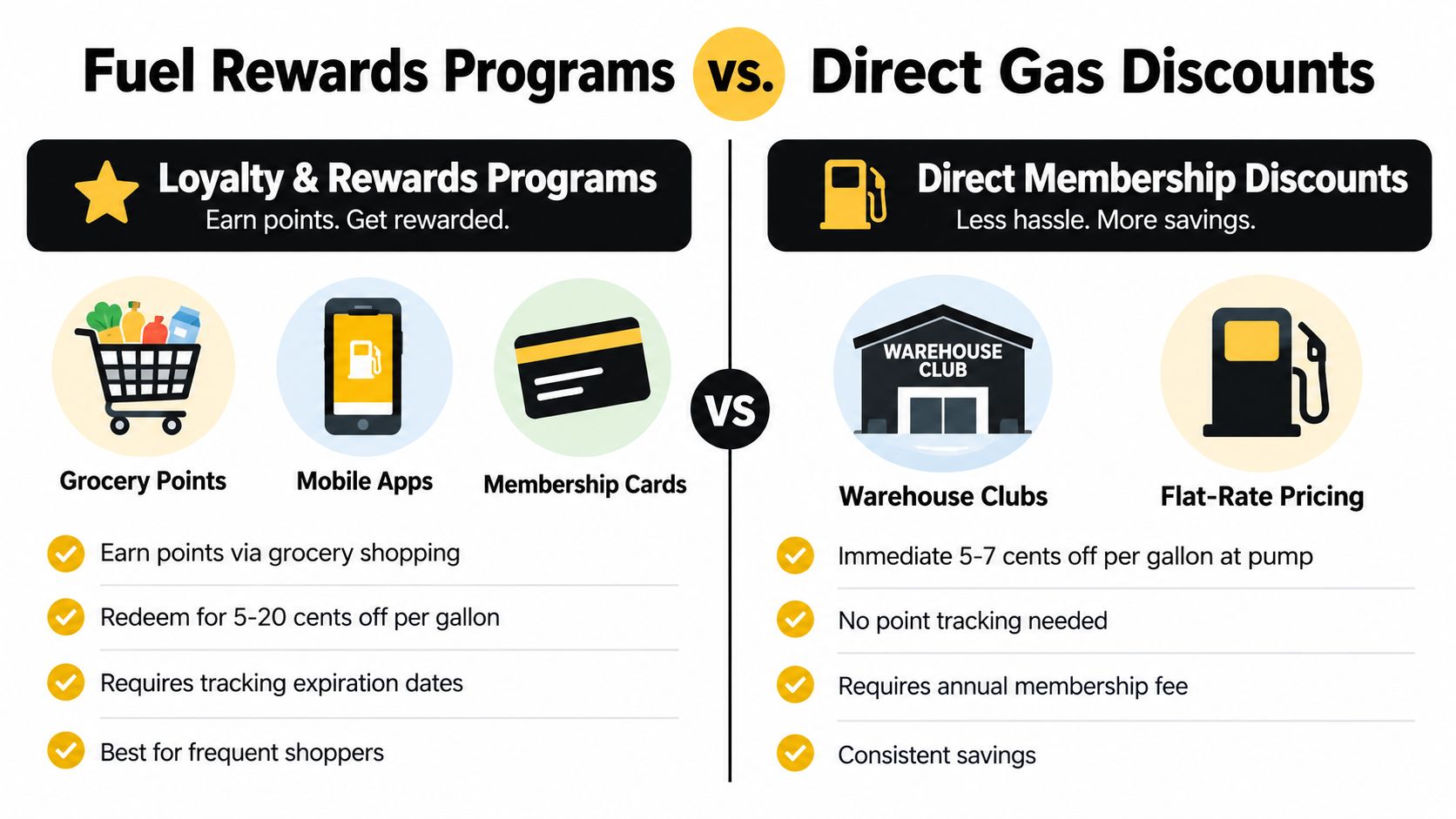
Fuel rewards work best when they attach to spending you already planned. Start with the grocery store or fuel chain you use most often, then learn how points accrue, when they expire, and where they can be redeemed. Programs from grocery chains, Shell, Speedway, and other station brands can reduce the amount you pay at the pump, but only if you understand their restrictions.
Don't join every available program. Multiple accounts create forgotten balances and make it harder to know which discount is useful. Choose one primary program, add household members where the rules allow it, and check the account before filling up.
Keep the program simple
- Join where you already shop: Avoid changing stores solely to earn points.
- Read redemption rules: Confirm participating stations, limits, and expiration dates.
- Use promotions selectively: Buy only items you need when a bonus offer is available.
- Redeem deliberately: Apply accumulated rewards to a fill-up that fits your normal schedule.
- Review payment rewards: Check whether your existing card offers compatible cash back without adding debt.
A fuel discount should reduce a normal purchase, not encourage extra shopping. Use a broader savings feed to compare fuel rewards with other opportunities such as duplicate charges, price adjustments, or recurring expenses. The best program is the one that saves money without adding complexity or unnecessary purchases.
6. Use the Manufacturer-Recommended Octane Rating
Premium fuel isn't automatically better for every engine. Read the fuel-door label and owner's manual, then distinguish between fuel the manufacturer requires and fuel the manufacturer merely recommends. If regular fuel is approved, buying a higher octane grade adds cost without necessarily adding useful performance for your driving.
Don't guess based on the car's badge, appearance, or what another driver uses. Turbocharged and high-compression engines can have different requirements, and the correct decision belongs to the specific vehicle. If the manual requires premium, follow it. If it approves regular, use the approved grade consistently.
The cheapest fuel is the lowest grade your vehicle manufacturer explicitly approves.
Tell every household member who drives the car which grade to select. Keep the recommendation visible in the fuel door or owner's manual, and record fuel economy over comparable driving if you're deciding between approved options. Compare similar routes and loads rather than judging one tank in isolation.
Don't deliberately use fuel below the required specification. A small pump saving isn't worth risking poor operation, engine damage, or a warranty dispute. Follow the written requirement first, then optimize within those limits.
7. Reduce Vehicle Weight by Removing Unnecessary Items
A trunk full of tools, sports equipment, boxes, and old supplies makes the vehicle carry a load on every trip. Remove items you don't use and create a simple storage system so frequently needed equipment can go back in quickly. Keep genuine emergency equipment, but question objects that remain in the vehicle only because nobody has taken them out.
Aerodynamic equipment matters too. Remove roof racks, bike carriers, and cargo boxes when you aren't using them. They can add drag even when the vehicle is otherwise empty, so seasonal equipment shouldn't remain mounted through every ordinary commute.
Make the decision once
- Empty the trunk: Put every removable item in one place.
- Separate essentials: Keep safety equipment and legally required items.
- Review occasional gear: Return sports, work, and travel equipment after use.
- Remove unused exterior gear: Take off racks and boxes between trips.
- Use lighter alternatives: Replace bulky containers or tools when a suitable option exists.
AAA guidance says each 100 pounds of cargo can reduce fuel economy by up to 1%, and it also warns that rooftop cargo boxes hurt aerodynamics in its fuel-efficiency guidance. The exact effect depends on the vehicle and route, but the implementation cost is low. Clear the car before the next full week of driving, then keep only what you need.
8. Use Telematics and Vehicle Tracking to Monitor Fuel Economy
Telematics turns fuel saving into a routine you can check. Start with the car's existing trip computer or MPG display. After refueling, reset one trip meter, record the route, traffic, load, and fuel spend, then compare similar drives before judging a habit or route.
Use the readings to find repeatable waste. Review your highest-consumption trips and compare urban errands, highway journeys, heavy traffic, cold weather, and long waits with the engine running. If efficiency drops after rushed starts or extended idling, change that behavior first. Smoother acceleration and fewer idle minutes can produce immediate savings without buying equipment.
Run one simple test at a time. Set a baseline, change one driving habit, and review the results weekly. Household drivers should use the same standard, such as checking fuel economy after comparable trips rather than comparing unrelated journeys. A sudden decline deserves investigation before you try to compensate through driving changes.
Modern infotainment systems may show fuel economy, trip distance, and driving feedback. An OBD-II device or a service such as monitor your car's health can add vehicle information, but only pay for a tracker or subscription if you will review the data and act on it. When readings change sharply, check tire pressure, maintenance status, traffic patterns, and load first. This approach can protect longer-term efficiency while avoiding an unnecessary recurring cost.
9. Choose Fuel-Efficient Vehicle Options and Right-Size Transportation
Choose the vehicle that matches your routine, not the largest task you might occasionally face. The right model lowers fuel demand on every future trip, while the wrong size locks in higher fuel costs for years.
Before buying or renting, compare the exact trim, drivetrain, and model year on FuelEconomy.gov. Review fuel economy alongside purchase price, maintenance, insurance, and financing. A hybrid, smaller car, or other efficient option may reduce fuel use for daily travel, especially if a large SUV mainly carries one commuter.
Use this decision sequence:
- List actual use: Write down regular passengers, cargo, terrain, weather, towing, and trip requirements.
- Compare total cost: Add fuel, maintenance, insurance, financing, and purchase costs to the comparison.
- Consider used options: Have a well-inspected used efficient vehicle checked before choosing it over a new model.
- Check incentives: Verify current federal, state, and local rules before including a credit in your calculation.
- Test the fit: Confirm comfort, visibility, storage, charging access, and performance in realistic conditions.
Right-sizing means choosing enough capacity for frequent needs while accepting that occasional towing or extra cargo may require another solution. A vehicle that uses fewer gallons on routine trips can create ongoing savings, but replacing a reliable car immediately may cost more than it saves.
If your current vehicle already fits your needs, start with lower-cost actions such as route planning, trip consolidation, proper tire pressure, and smoother driving. If you are already shopping, make fuel economy a purchase criterion from the beginning, not an afterthought.
10. Track Vehicle Subscriptions and Services to Eliminate Unnecessary Costs
Recurring vehicle charges can consume money that should cover fuel, maintenance, or other priorities. Start with your bank and card statements, then search email receipts for satellite radio, connected-car services, roadside assistance, navigation memberships, charging-network plans, insurance add-ons, and trials that became paid subscriptions.
Audit each charge in this order: identify the service, confirm recent use, compare overlapping coverage, and cancel anything that no longer earns its place. Roadside assistance may already come with insurance, a warranty, an auto club, or a credit card. Charging-network plans often add little value when you use one network only occasionally. Check manufacturer-connected services carefully because included access can change to a paid renewal. Confirm the current terms before cancelling.
Set a calendar reminder before every trial or annual plan renews. Review statements quarterly, flag unfamiliar vehicle-related merchants, and ask whether a low-use plan can be replaced with pay-as-you-go access. These actions can produce immediate recurring savings, while checking renewal terms prevents the same charge from returning later.
The Money Leak Finder can help surface recurring charges, duplicate transactions, and bills that increased. Electric-vehicle owners should also review guidance on how to budget for electric car upkeep, so lower fuel spending does not conceal new service costs.
Redirect cancelled-service savings only after identifying a real need. A tire gauge, maintenance item, or fuel-rewards program can support broader savings, but removing an unused charge is the fastest gain. Don't replace one subscription with another without checking actual use first.
11. Keep Maintenance Records and Fix Efficiency Problems Early
Fuel savings depend on catching faults before they waste fuel and create larger repair bills. Keep a dated log of oil service, filter changes, tire rotations, alignment checks, warning lights, and repairs. After each visit, record the mileage, work completed, parts replaced, and technician's recommendations.
The process is simple: save the invoice, add the vehicle's mileage, note any new symptom, and file fuel records alongside the maintenance history. This creates a usable timeline instead of relying on memory. It also helps you distinguish a routine service need from a problem that requires diagnosis.
Let the record guide the next action
- Uneven tire wear: Show photos and recent service records, then request an inspection of alignment, suspension, and the tire itself.
- Sudden MPG decline: Bring the maintenance log and recent fuel records to a technician so the diagnosis starts with documented history.
- Repeated warning lights: Provide the dates and repair details, then have the underlying code diagnosed instead of repeatedly clearing it.
- Overdue service: Check the owner's manual and log before approving work, then ask which item affects operation or reliability.
- Unclear recommendations: Request the reason for each repair, what happens if it waits, and an itemized estimate.
Record keeping takes minutes but can prevent repeated diagnostic fees and catch efficiency problems before they become expensive repairs. Keep receipts and mileage records together so you can connect completed work with later driving results. Use the manufacturer's manual and the vehicle's documented history to decide what happens next, rather than accepting a generic promise of better fuel economy.
11 Gas-Saving Strategies Comparison
| Strategy | Implementation complexity 🔄 | Resource & cost ⚡ | Expected outcomes 📊⭐ | Ideal use cases 💡 | Key advantages ⭐ |
|---|---|---|---|---|---|
| Monitor Fuel Price Fluctuations and Time Fill-Ups Strategically | Low, install/use apps and set alerts | Low, smartphone + time to check | Moderate, ~10–15¢/gal; ~$200–400/yr | Commuters and frequent drivers in competitive markets | Immediate per-fill savings; stacks with other tactics |
| Optimize Driving Habits to Reduce Fuel Consumption | Medium, requires consistent behavior change | Very low, time/discipline, optional coaching | High variable, 10–40% depending on driver | Long-distance drivers, fleets, safety-focused users | No equipment cost; improves safety and vehicle life |
| Maintain Proper Tire Pressure and Regular Vehicle Maintenance | Low, routine checks and scheduled service | Low, DIY or modest service costs | Moderate, 3–10% fuel economy improvement | All vehicle owners; aging or high-mileage cars | Measurable ROI; improves safety and prevents repairs |
| Plan Routes Efficiently and Minimize Unnecessary Driving | Low–Medium, planning and app use | Low, navigation apps (often free) | Moderate, 5–15% reduction in miles/time | Errand-heavy households, delivery drivers, commuters | Immediate miles and time savings; lowers emissions |
| Use Fuel Rewards Programs and Grocery Store Gas Partnerships | Low, enroll and track points | Low, requires loyalty accounts and app management | Moderate, 5–20¢/gal; ~$200–800/yr depending on spend | Frequent grocery shoppers and households pooling purchases | Free to join; leverages existing spending for fuel discounts |
| Avoid Premium Fuel and Use Manufacturer-Recommended Octane Ratings | Very low, follow vehicle manual | None, use correct pump grade | Moderate, saves 20–50¢/gal for many drivers | Most drivers whose vehicles require regular fuel | Immediate cost avoidance with no performance loss |
| Reduce Vehicle Weight by Removing Unnecessary Items | Low, remove cargo and attachments | None to low, storage choices or alternatives | Small, ~1–2% per 100 lbs; 2–5% typical | Drivers with roof racks, heavy cargo, or unused equipment | Zero-cost, immediate improvement in efficiency |
| Leverage Telematics and Vehicle Tracking to Monitor & Improve Fuel Economy | Medium–High, device install and data setup | Medium, OBD devices $50–300, possible subscriptions | Moderate, 5–15% via feedback-driven behavior change | Fleets, engaged drivers, insurance program participants | Real-time feedback, driver-specific insights, measurable ROI |
| Choose Fuel-Efficient Vehicle Options and Right-Size Your Transportation | High, major purchase or rental choice | High, upfront cost, possible incentives/credits | Very high, hybrids 30–50%; EVs eliminate fuel costs | Buyers, high-mileage drivers, long-term owners | Biggest long-term savings; tax credits and lower operating costs |
| Track Subscriptions and Services Related to Vehicles to Eliminate Unnecessary Costs | Low–Medium, audit and ongoing monitoring | Low, time or a monitoring service (e.g., Compass+) | Variable, removes recurring fees; frees budget for fuel savings | Drivers with many OEM/third-party subscriptions | Identifies hidden costs; reclaims recurring budget for other strategies |
Build Your Personal Fuel-Savings Stack
Start with the changes that require no purchase and affect your next drive. Check the vehicle's recommended octane, measure tire pressure while the tires are cold, remove unnecessary cargo, and stop paying for fuel grades or vehicle services your car and household don't need. These actions take little planning and can reveal waste before you make a larger transportation decision.
Next, change how and why you drive. Accelerate smoothly, anticipate stops, reduce unnecessary idling, combine errands, and remove avoidable miles. The right priority depends on the route. Stop-and-go traffic creates more opportunity for aggressive-driving waste, while a highway driver may gain more from steady speed, correct tire pressure, and removing aerodynamic equipment. Don't apply every suggestion equally. Match the action to the condition that dominates your driving.
Then add one system that makes the habits easier to maintain. Enroll in the fuel rewards program connected to your normal grocery or station routine, and use a price-tracking app before filling up. Set up the vehicle's MPG display or trip computer, record the starting mileage, and review the result regularly. A rewards program can lower the price per gallon, but it won't compensate for unnecessary miles or an underinflated tire.
Finally, audit the expenses around the vehicle. Review statements for duplicate charges, low-use subscriptions, renewal fees, and overlapping roadside or connected services. Compass+ can monitor linked financial, email, calendar, and shopping accounts to surface recurring charges, price changes, refund opportunities, and specific next steps. That makes it useful alongside a fuel log, especially when transportation costs are spread across several accounts.
Give the process a clear test period. Record your baseline fuel spend and typical miles, choose two or three changes, and keep them consistent for a month. Compare transaction history, odometer readings, gallons, and route conditions. Don't assume an advertised estimate will apply to your vehicle. Your own records will show whether the biggest opportunity is the pump price, driving behavior, tire pressure, trip planning, vehicle setup, or a recurring charge that shouldn't be there.
Compass+ monitors linked financial, email, calendar, and shopping accounts to find specific ways to reduce transportation and household costs, including recurring charges, duplicate transactions, missed refunds, and low-use subscriptions. Use Compass+ to turn scattered account activity into clear savings opportunities and practical next steps.