Do You Tip: A Complete Etiquette Guide
Do You Tip. Learn exactly when you should tip and how much. Practical etiquette guide covering restaurants, delivery, rideshare, and more for 2026.
12 min read
You're standing at a coffee counter, card ready, while a tablet turns toward you. The screen offers several tip amounts before you've taken the first sip. You don't want to seem rude, but you also wonder whether you're rewarding service that hasn't happened yet. So you pause, calculate, and ask yourself the question many people now face several times a week: do you tip?
The answer depends on more than the quality of service. It depends on the type of work, the local custom, whether a service charge is already included, and whether the request comes before or after the service. Once you separate those factors, tipping becomes less like a social test and more like an ordinary spending decision.
Table of Contents
- Understanding Why Tipping Feels Harder Now
- Basic Tipping Rules by Service Type
- Tipping Around the World
- Everyday Tipping Scenarios That Leave You Unsure
- The Digital Tip Prompt Dilemma
- Building Your Personal Tipping Framework
Understanding Why Tipping Feels Harder Now
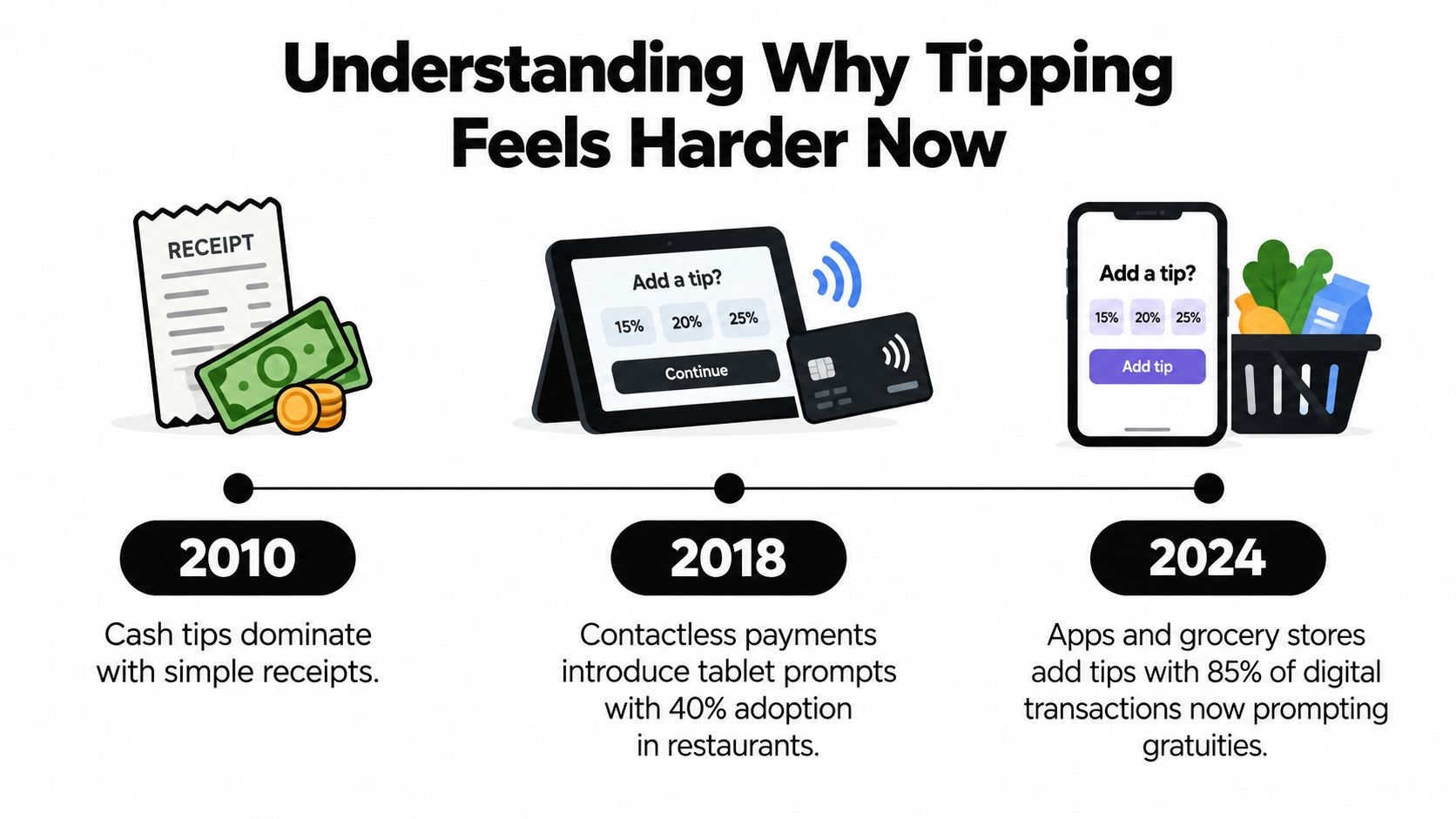
A decade ago, many people connected tipping with a small group of familiar services, especially table service, taxis, salons, and hotel staff. Today, a payment screen may ask for a gratuity at a café, a counter-service restaurant, a market, or during an online checkout. The request appears quickly, often while other customers wait behind you, so the decision feels public even when it's personal.
That uncertainty isn't a sign that you're inconsiderate. The social rule itself has expanded and become less consistent. Pew Research Center's reporting on America's tipping culture found that 72% of U.S. adults believe tipping is expected in more places than it was five years earlier. At the same time, 77% say service quality is a major factor in deciding whether and how much to tip.
Why old instincts no longer work everywhere
People often carry one mental rule from restaurants into every setting: if someone helps you, add a percentage. That approach breaks down because a server who manages a meal from start to finish provides a different kind of service from a cashier who rings up a packaged item.
Historical expectations have also shifted. The Richmond Fed notes that 10% was customary during the first half of the twentieth century, 15% became a baseline by the 1980s, and 20% is increasingly common today, as described in the Pew reference above. Suggested amounts on digital screens make that change visible at the exact moment you're paying.
The result is a conflict between two reasonable instincts. You may want to support workers, yet you may also want the posted price to represent the actual cost. You may appreciate excellent service, but you may not believe every transaction requires a reward. Confidence comes from recognizing that a prompt is a request, not proof of an obligation.
Basic Tipping Rules by Service Type
Start with the service, not the screen. Ask whether a worker is providing personal, ongoing assistance, whether the price already includes a service charge, and whether the person relies on gratuities as a meaningful part of their income. Those questions usually tell you more than the suggested buttons.
For a full-service restaurant, a percentage-based tip remains the clearest convention. A practical range is the customary restaurant norm, adjusted for attentive service, errors, and your budget. Pew's tipping research found that 92% of sit-down restaurant customers always or often tip, while 57% of Americans say they'd tip 15% or less for an average sit-down meal. That split shows why there isn't one universally accepted answer.
| Service | A calm default | What changes the decision |
|---|---|---|
| Sit-down restaurant | Use the established restaurant percentage custom | Check whether a service charge is already included |
| Fast-casual counter | Tipping is usually optional | Tip when staff provide substantial table help or extra care |
| Coffee shop | A small tip is appreciated, not automatically required | Consider customized preparation, a long interaction, or exceptional help |
| Bar | Tip for drinks and attentive service | A simple transaction may call for less than table service |
| Food delivery | Tip based on the delivery effort and conditions | Distance, weather, stairs, parking, and careful handling matter |
| Rideshare | Consider the completed ride and extra assistance | Luggage help, accessibility support, or unusual effort can justify more |
| Hair salon | Tipping is a common part of the service relationship | Base the amount on the stylist's work and the appointment experience |
| Hotel housekeeping | Leave a clearly marked gratuity for repeated room service | The amount can reflect stay length, room condition, and assistance |
Coffee and fast-casual purchases deserve special attention because customers often confuse appreciation with expectation. Pew found that 25% of coffee customers and 12% of fast-casual customers always or often tip, compared with the much higher restaurant figure cited above. If you're unsure, review your spending patterns with this practical money resource, then choose a rule you can afford to follow consistently.
Practical rule: Tip for the work being performed, not simply because a device displays a percentage.
Tipping Around the World
The safest international rule is simple: don't export American tipping habits automatically. In the United States, gratuity often supplements the expected price of personal service. In other places, businesses may build service into menu prices, pay structures, or an included charge.
In Japan, a customer can show respect by paying the stated amount without adding a tip. Offering extra money may create confusion rather than gratitude. South Korea also tends to rely more on the listed price and included service arrangements than on an American-style percentage added at the end.

Europe uses several different models
Europe doesn't have one tipping culture. In France, Italy, and neighboring countries, menus and bills may include service, while a small additional amount can express appreciation for especially good attention. In some destinations, rounding up is more natural than calculating a large percentage.
The distinction matters because adding an American-sized tip where service is already included can make you pay twice for the same expectation. Before paying, scan the bill for wording that indicates service, cover charges, or gratuity. If you can't tell, ask politely whether service is included.
Travelers should also consider the payment method. A digital terminal may offer the same options in every country, but the presence of a tip button doesn't mean local residents use it. Cash can be useful when a worker accepts a small gesture but the card system treats gratuity as a formal percentage.
A local hotel employee, restaurant host, or tour operator can usually explain the custom without judgment. You can also check a current local guide before leaving home, especially if the destination has its own service-charge convention.
For a visual introduction to how travel customs differ, watch this short guide after considering the image above.
Don't treat a tip as a universal language. It's a cultural dialect, and the meaning changes at the border.
Everyday Tipping Scenarios That Leave You Unsure
Consider a barista who makes a straightforward drip coffee, turns the cup around, and presents a tip screen. You can leave a small amount if you value the interaction, want to support the worker, or received extra help. You can also choose no tip without treating the employee badly. A counter prompt changes the payment experience, but it doesn't automatically turn a simple purchase into table service.
Takeout creates a similar pause. If staff only hand you a sealed bag, tipping is generally optional. If they organize a complex order, accommodate changes, pack delicate food carefully, or provide table-style assistance, a gratuity becomes a more meaningful way to recognize the additional work.
When the service includes extra effort
A rideshare trip doesn't require the same decision every time. A driver who provides a normal ride has completed the basic service. If the driver loads heavy luggage, waits while you resolve a pickup problem, or makes the trip easier for a passenger with mobility needs, that extra effort gives you a clear reason to add something.
Group dining can feel more complicated because several people may have different budgets and tipping habits. Agree before the check arrives whether everyone will pay their share of the food and add a consistent gratuity, or whether one person will calculate the total. If someone can't afford the preferred amount, a calm conversation is better than public embarrassment.
Service problems require a separate judgment. Don't use a tip to punish a worker for a kitchen delay, a broken payment system, or a policy they can't control. If the service was careless or disrespectful, reduce the tip when appropriate and explain the problem to a manager. Your payment should communicate the experience without turning a stressful moment into a confrontation.
A useful three-question check works across unfamiliar situations:
- Did the worker provide personal service or extra effort?
- Is tipping an established expectation for this type of work?
- Is a service charge already included?
If the first two answers are no, the tip is probably optional. If both are yes, tipping is more likely to be expected. If the third answer is yes, inspect the bill before adding more.
The Digital Tip Prompt Dilemma
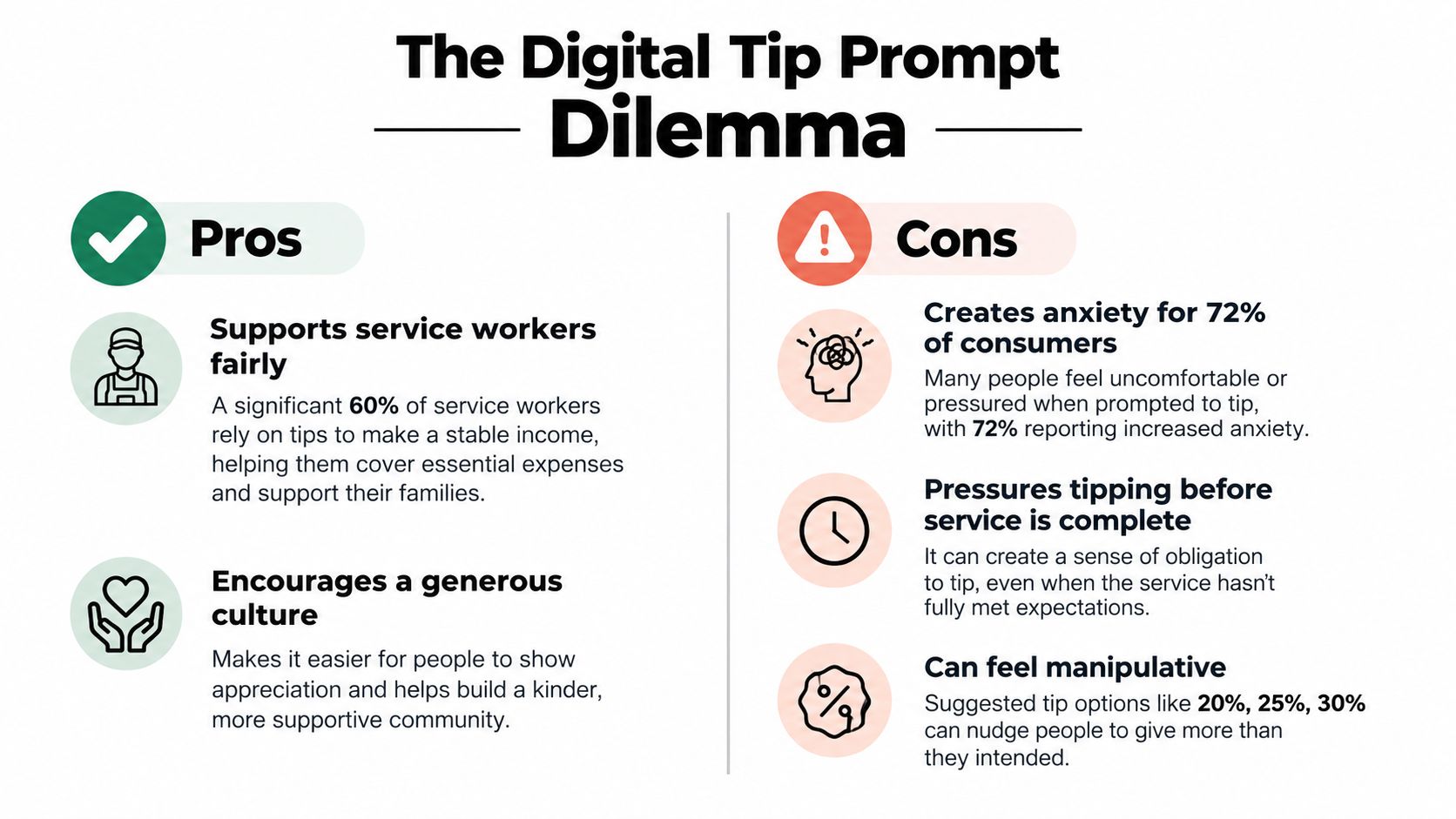
A digital tip prompt creates a special problem because it often appears before the service is complete. A barista may ask before you taste the drink. A counter employee may ask before you receive the food. An online checkout may request a gratuity before anyone has delivered anything.
That timing matters. A suggested percentage can make a customer feel that declining is a public rejection of the worker, even when the business has already set a price for the transaction. Bankrate's survey reporting on tipping culture found that 27% of people tip less or not at all when faced with a pre-entered tip screen, and 40% avoid businesses with tip prompts. Those responses suggest that prompts don't just encourage generosity. They can also create distrust and decision fatigue.
A better way to answer the screen
Use a policy before the device asks you to improvise. For example, you might tip reliably for completed personal service, tip selectively at counter-service businesses, and leave no tip for ordinary transactions where no gratuity is customary. That policy protects you from choosing based on embarrassment.
You can also adjust the prompt without apologizing. Select a custom amount, choose zero, or use cash after the service if that gives you greater control. If you're unsure whether a service charge is included, ask before paying. A worker shouldn't have to defend the payment system, but a brief question can clarify whether the tip is shared and whether it's optional.
Digital systems also affect workers and business operations. Restaurants and delivery businesses may need to track how gratuities are collected and distributed, which is why operators sometimes use tools such as a digital tipout system to organize payments more transparently. That operational need doesn't remove your right to make an informed choice.
Cornell's synthesis of tipping research adds another useful caution: service quality explains only a small share of differences in tip size, while bill size, payment method, and group dynamics can have larger effects, as described in its research summary on tipping behavior. In other words, the button you press may reflect social pressure as much as your evaluation of the service. If a prompt makes you question where your money is going, a money leak finder can help you review recurring spending separately from the emotional moment at checkout.
A prompt deserves a considered answer, not an automatic one.
Building Your Personal Tipping Framework
You don't need a perfect rule for every possible transaction. You need a repeatable method that respects both the worker's effort and your financial limits.
Begin with the service category. A sit-down meal, a haircut, and a delivery involve personal work that customers commonly recognize with gratuity. A packaged purchase or routine counter transaction usually gives you more discretion. Then check the bill for an included service charge before adding anything.
Next, separate three reasons for tipping:
- Social expectation: You follow a well-established custom because the worker's role is commonly compensated this way.
- Recognition: You add more because the person provided unusually thoughtful, careful, or difficult service.
- Support: You choose to give because you want to help a worker, even when the setting doesn't require it.
Your budget is part of the decision, not an afterthought. A tip shouldn't force you to miss a bill or abandon a necessary purchase. For a broader way to assess what fits comfortably within your spending, use this guide to understand how much you can safely spend.
When the screen appears, run this short decision tree:
- What service did I receive?
- Was the service completed before the request?
- Is gratuity customary or already included?
- Did the worker provide extra effort?
- What amount can I give without resentment or financial strain?
Choose one change to make this week. You might decide to carry small cash for workers you intentionally want to reward, check service charges more carefully, or stop treating every digital prompt as an obligation. The aim isn't to eliminate generosity. It's to replace anxiety with an intentional choice.
Compass+ helps you monitor connected spending, receipts, subscriptions, and purchase details so you can spot specific savings opportunities instead of reviewing everything manually. If tipping decisions are part of a wider effort to control everyday expenses, visit Compass+ to see how the service can surface actionable ways to keep more of your money.